
Why Harbourlands?
Because Toronto has only one harbour, and it’s the city’s crown jewel.
Toronto can provide air access in more than one place. It can build housing in many places. It cannot create another downtown harbour.
That makes the harbour a uniquely scarce public asset—and raises a simple question:
What use of it will create the greatest long-term public benefit?
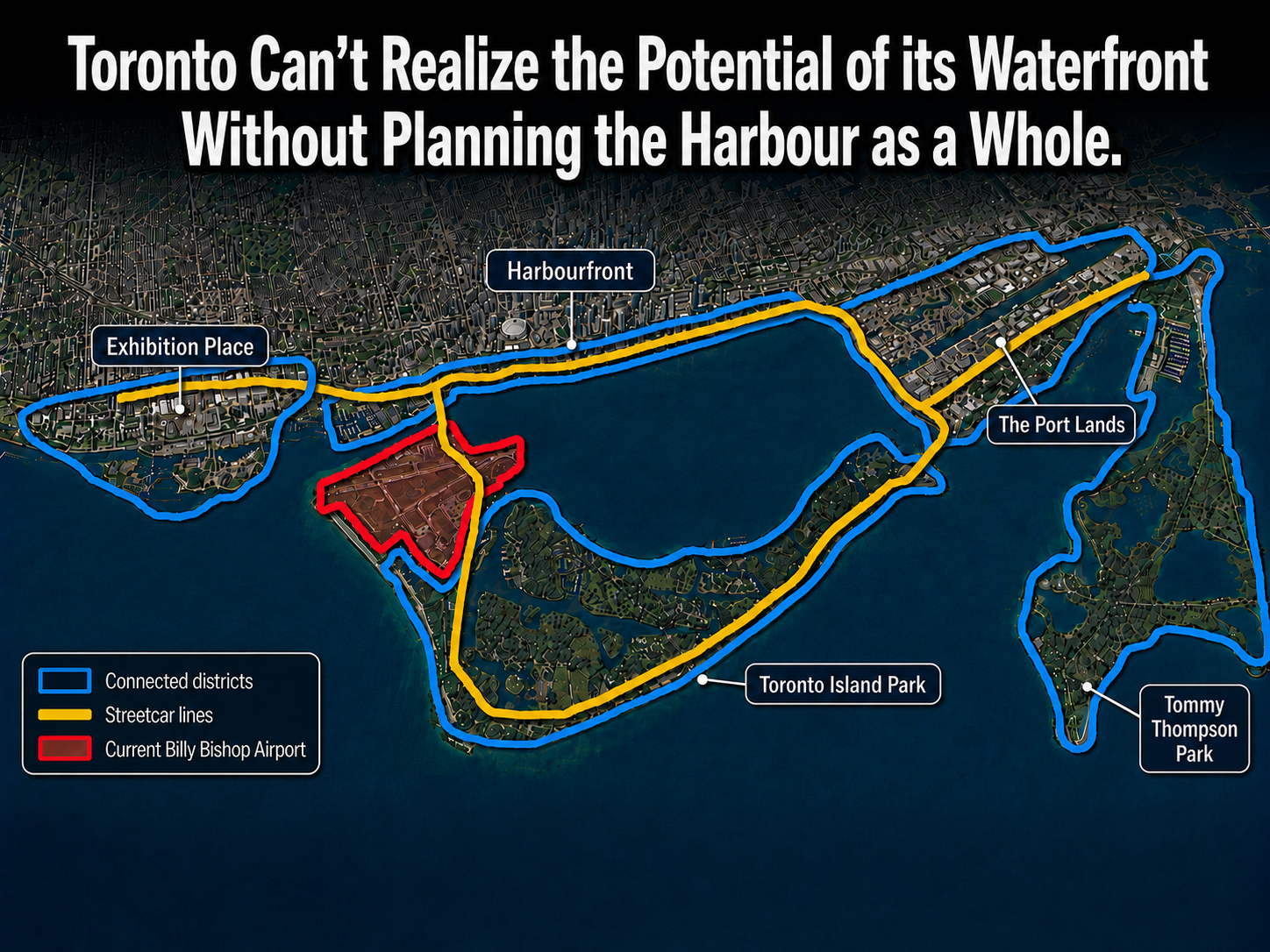
Billy Bishop Airport occupies valuable waterfront land, but its larger effect is on the harbour as a whole. It interrupts continuity, complicates transportation connections and prevents the Toronto Islands from functioning as one great urban park.
The issue isn't simply what the airport occupies. It's what its location prevents the rest of the waterfront from becoming.
One Irreplaceable Place. Many Ways to Move People.
Toronto needs excellent regional transportation and air connectivity. But those needs can be served through a network—Pearson, regional airports, rail, GO and other transportation investments.
The harbour cannot be relocated.
The strategic question is therefore whether Toronto's aviation needs can be met elsewhere while unlocking the much broader public value of its downtown harbour.
That is what an independent Net Public Benefit Study should determine.
Scarce Waterfront Land Requires a Higher Test
Housing is essential. Airports create value. But neither automatically represents the highest and best use of scarce waterfront land.
Toronto can build housing in many locations. It can provide air access through a regional transportation network.
It cannot create another downtown harbour.
A use can be valuable without being the highest-value use.
Connection Multiplies Value
Exhibition Place, Ontario Place, Harbourfront, Toronto Island Park, the Port Lands and Tommy Thompson Park are already major assets. Connected together, they could function as one destination rather than a series of separate places.
Each would create visitors for the others. Each would strengthen the others.
Chicago Demonstrates the Economic Value of a Connected Waterfront
Chicago and Toronto are unusually useful comparisons: large Great Lakes cities with major downtowns and extraordinary waterfront settings.
Chicago protected much of its lakefront as a continuous public landscape, connecting parks, beaches, attractions, cultural institutions, and its convention district. Toronto's waterfront assets remain far more fragmented.
Geography creates the opportunity. Connection creates the value.
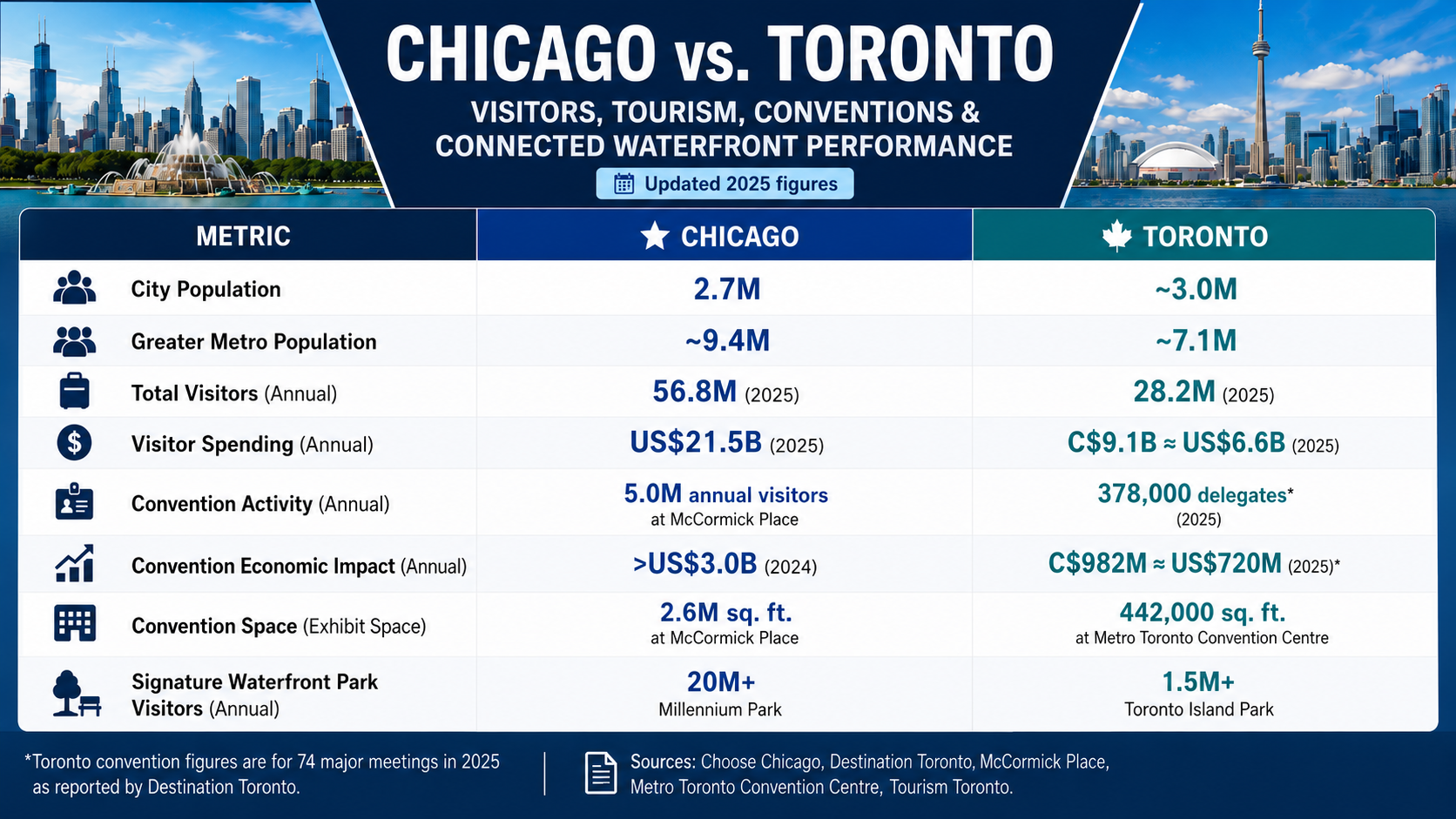
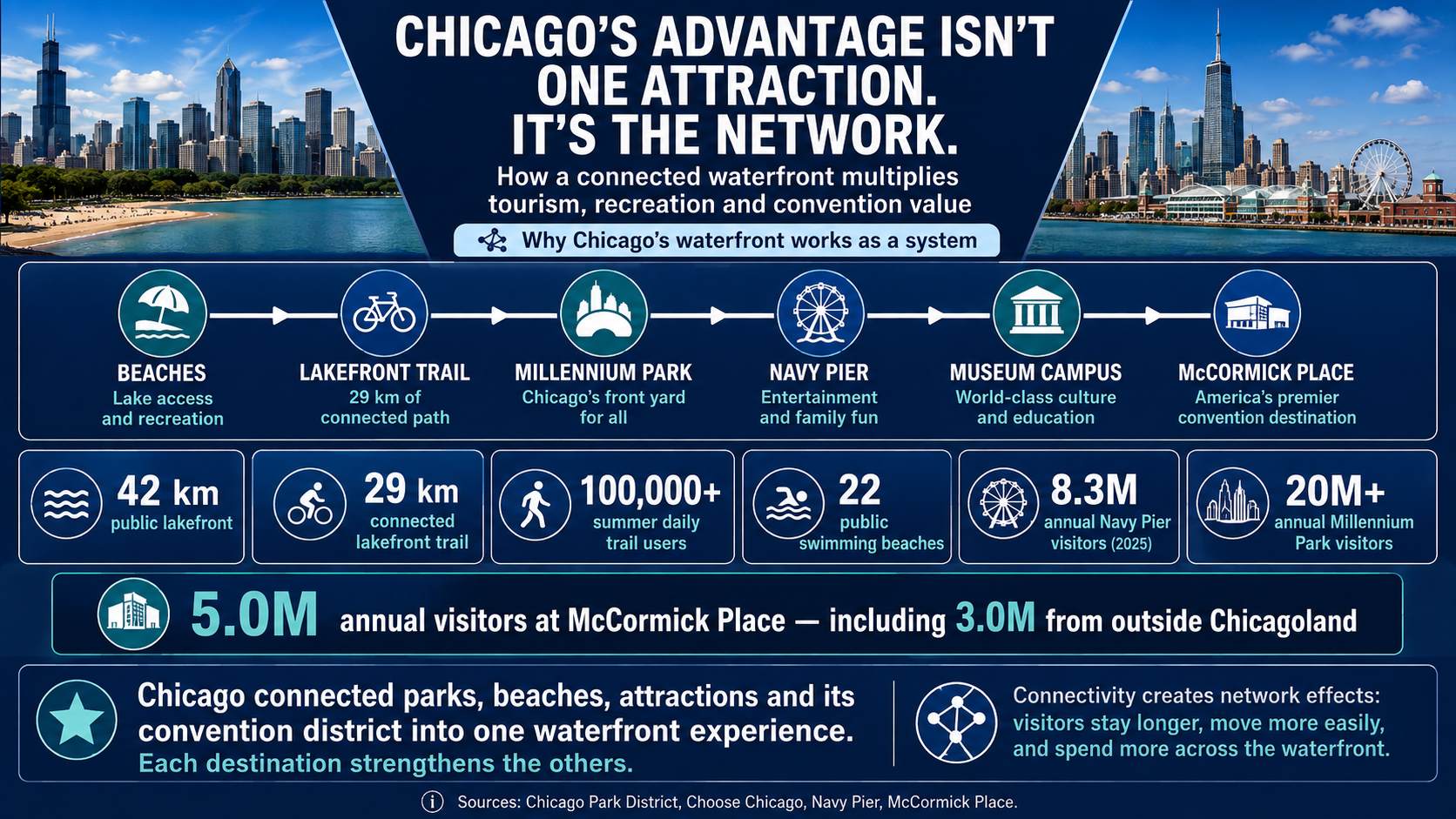
NOTE: These figures illustrate the relative scale and role of major waterfront assets; individual measures are not necessarily directly comparable.
The setting is the attraction
A convention centre in the Port Lands would compete on place—not simply on space.
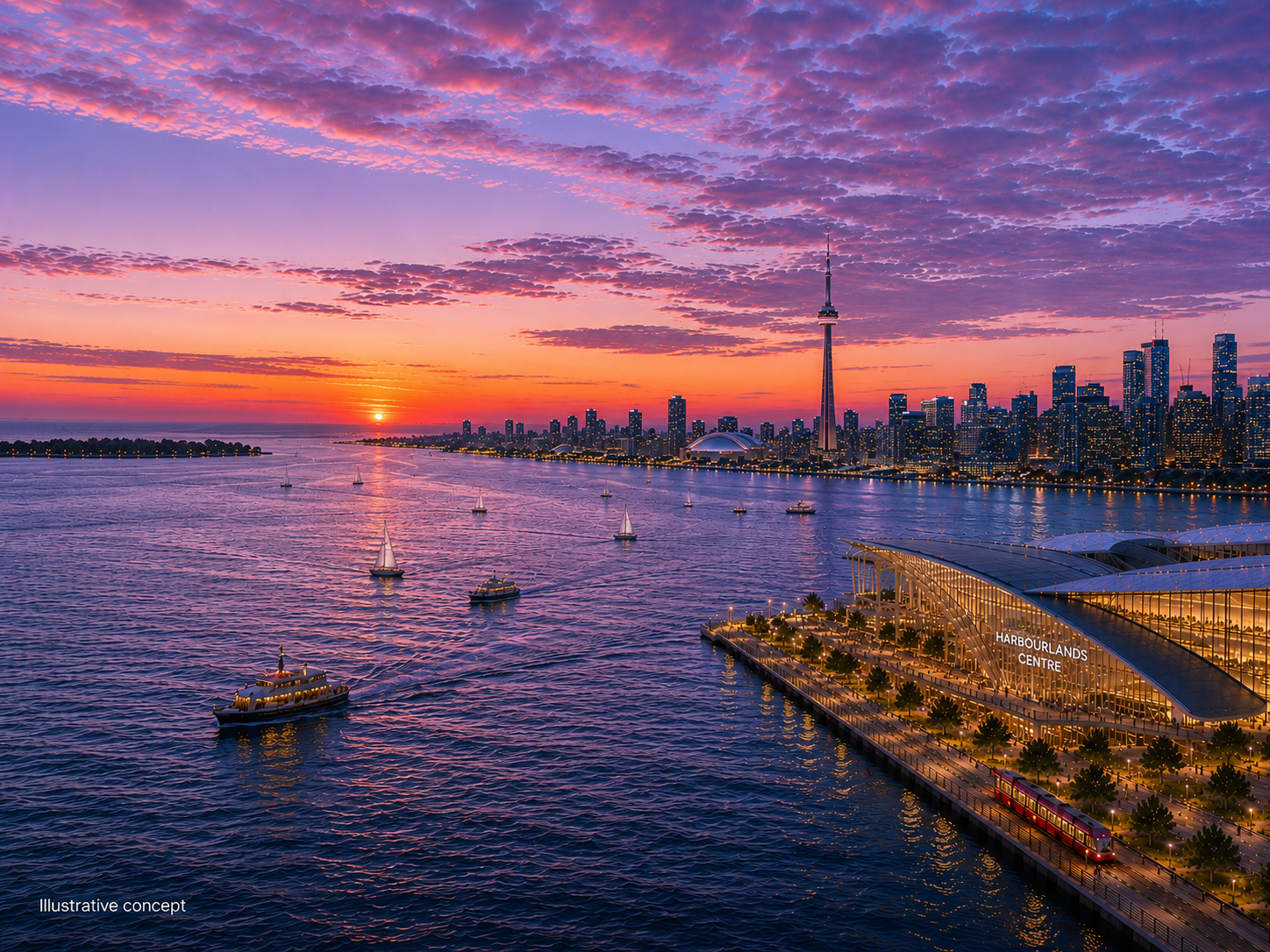
A Harbourlands Centre in the Port Lands illustrates how the harbour itself could create economic value.
Instead of competing only on exhibition space, it could compete on place—combining conventions, hotels, culture, parks, the Islands and one of the world's most recognizable skylines.
The convention centre would bring people to the waterfront. The waterfront would give people a reason to choose the convention centre.
A Destination Economy Built Around Place
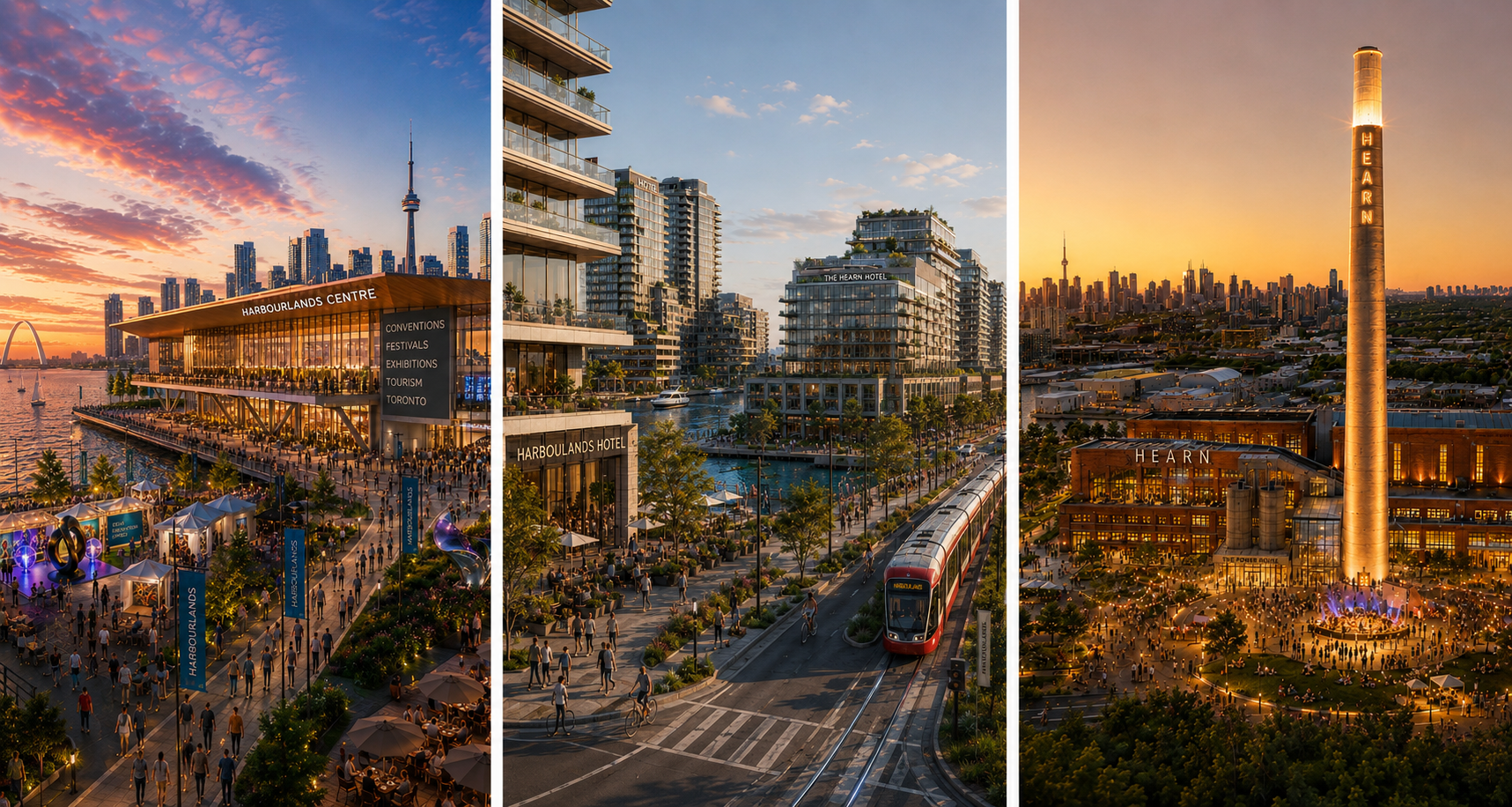
Conventions and major events.
Hotels and hospitality.
Culture and entertainment.
A convention centre brings delegates. Hotels extend stays. Culture and events create additional reasons to visit. Parks, the Islands and the harbour make the entire experience distinctive.
The convention centre would bring people to the waterfront. The waterfront would give people a reason to choose the convention centre.
The Market
In 2025, Toronto attracted 28.2 million visitors, generating $9.1 billion (CAD) in direct spending and nearly $13.5 billion in total economic impact. Major meetings alone generated an estimated $982 million.
Source: Destination Toronto
Toronto is Already Looking for This
Destination Toronto’s 2026 Destination Master Plan calls for new attractions and visitor “demand drivers,” better connectivity, stronger year-round appeal and investment in the public realm. It also identifies a next-generation convention centre, supported by hotels, restaurants and other amenities, as an important opportunity for Toronto’s visitor economy.
Harbourlands offers one possible setting in which many of those ambitions could come together.
Source: Destination Toronto, 2026 Destination Master Plan
Decisions being made today will shape the harbour for generations.
Transit, housing, parks, infrastructure, and public-land decisions made independently today could determine whether a connected harbour-wide destination remains possible tomorrow.
A city cannot compete for people and investment on jobs alone.
It must also offer quality of life.
One waterfront. Many returns.
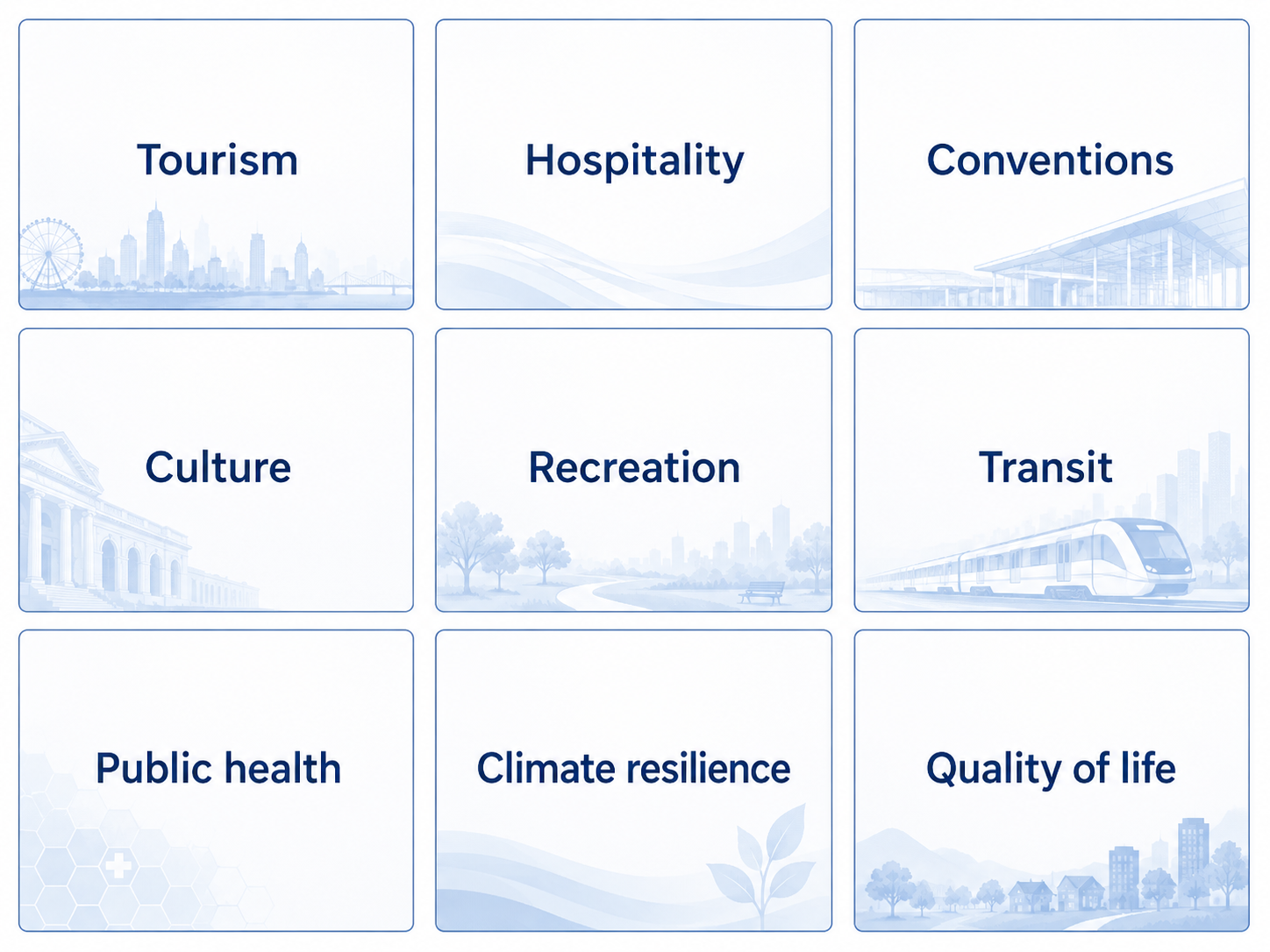
The case for Harbourlands is not based on any one benefit. It is the possibility of generating many forms of value from one connected public asset.
The Opportunity Deserves to Be Tested.
Harbourlands is not a predetermined answer. It illustrates what could become possible if Toronto's aviation and regional transportation needs can be better met elsewhere.
The next step is an independent study that compares alternatives and determines which strategy produces the greatest Net Public Benefit.