

A Net Public Benefit Study
Toronto has only one downtown harbour.
Before Toronto makes another long-term decision about Billy Bishop Airport, it should determine the highest and best use of its one irreplaceable downtown harbour.
The debate over Billy Bishop Airport has exposed a larger question: what use of Toronto’s downtown harbour would create the greatest long-term benefit for Toronto, Ontario and Canada?
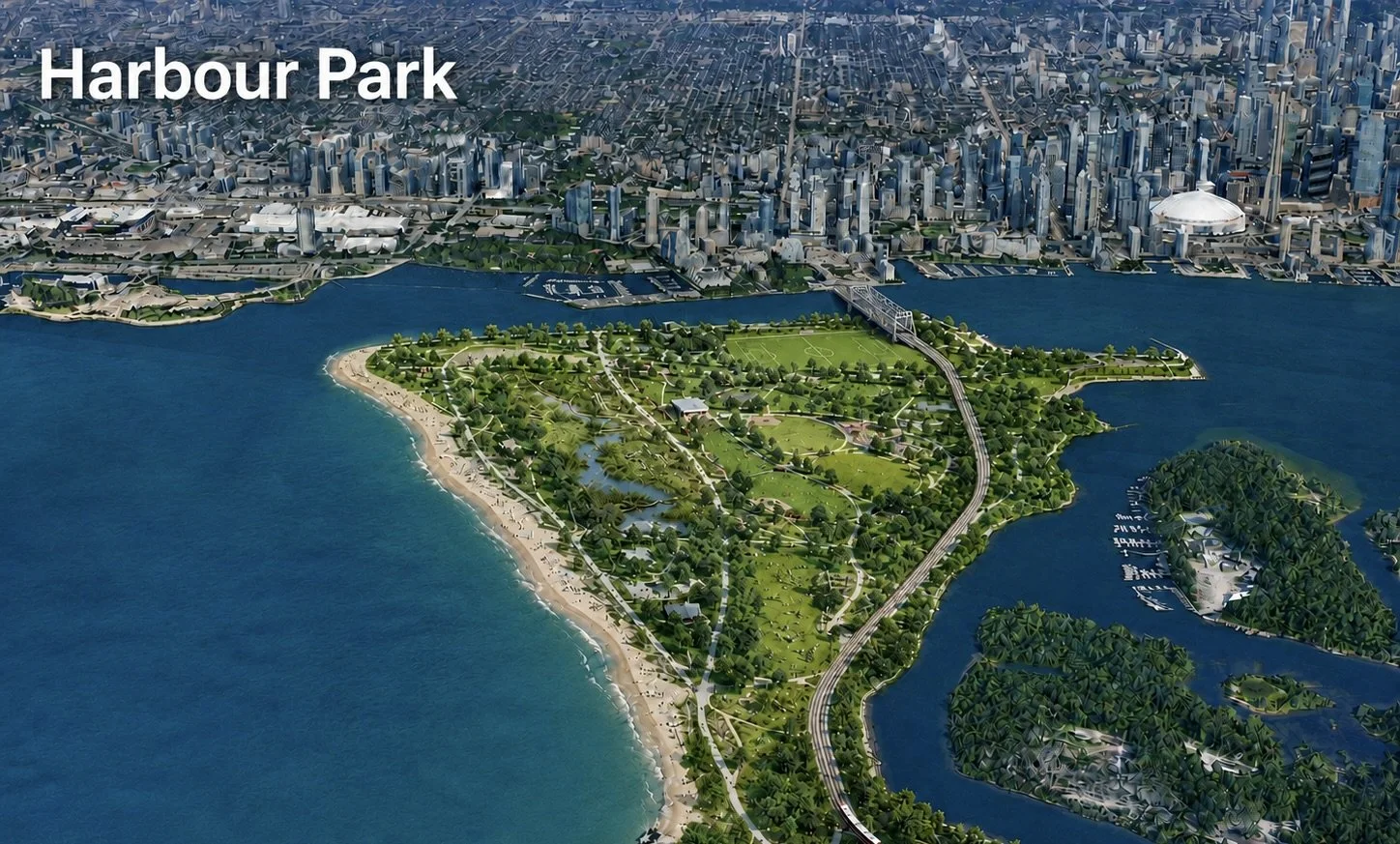
Harbourlands offers one possible answer: a connected, four-season waterfront linking Exhibition Place, Ontario Place, Harbourfront, the Toronto Islands, Ookwemin Minising, the Port Lands, the Hearn and Tommy Thompson Park.
But Harbourlands should not be treated as a predetermined outcome—and continued airport use should not be accepted simply because it is the status quo. Toronto needs an independent Net Public Benefit Study comparing the harbour’s realistic futures.
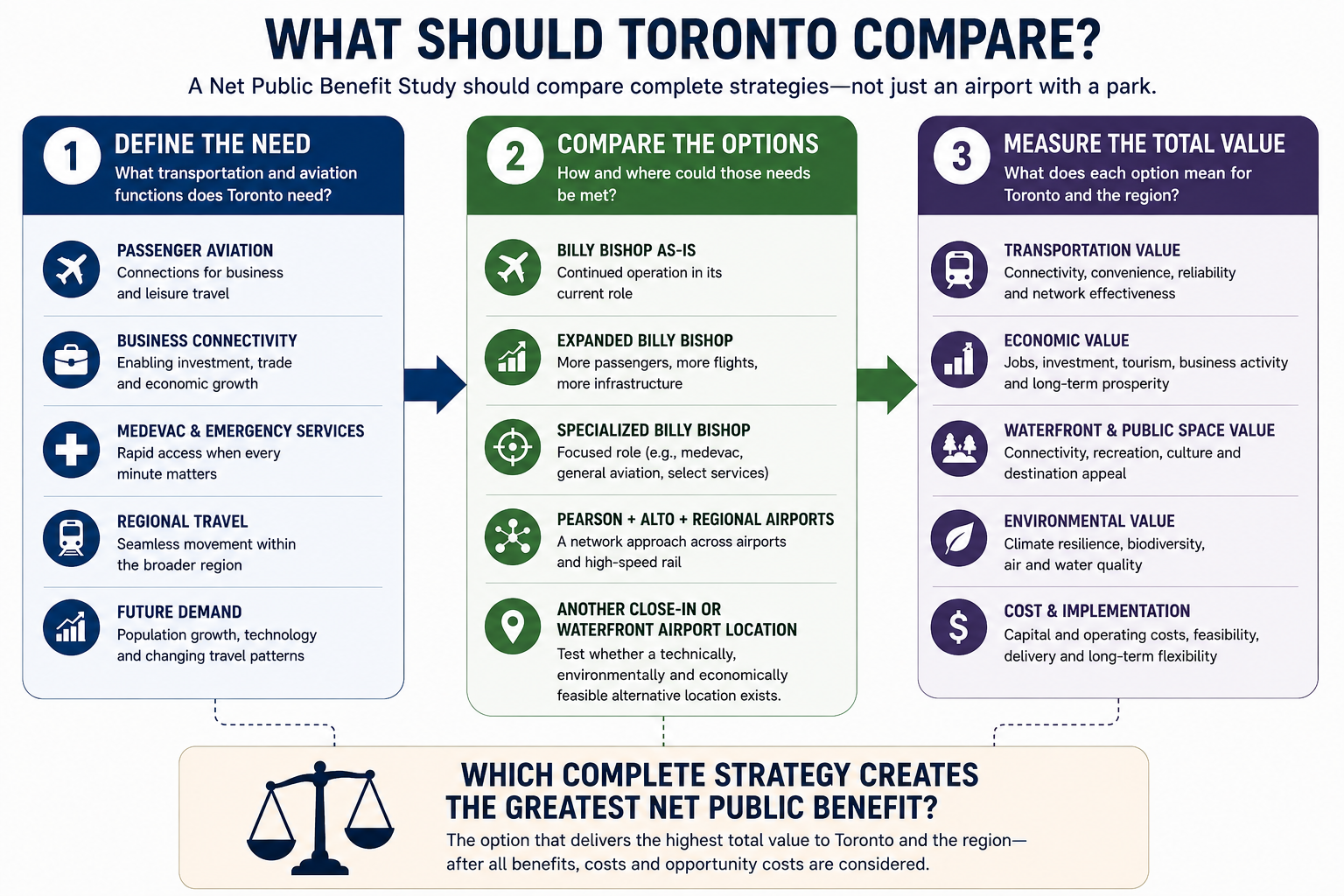
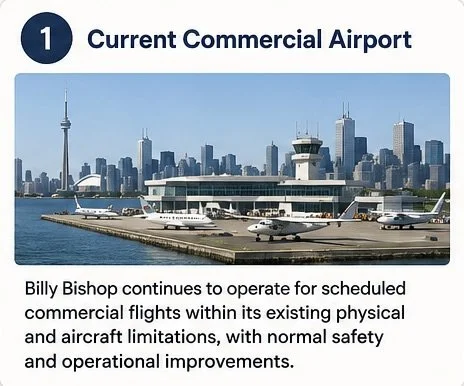
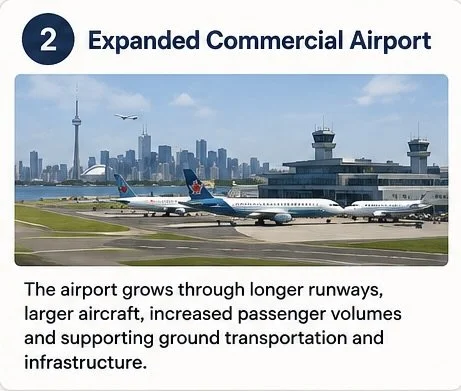
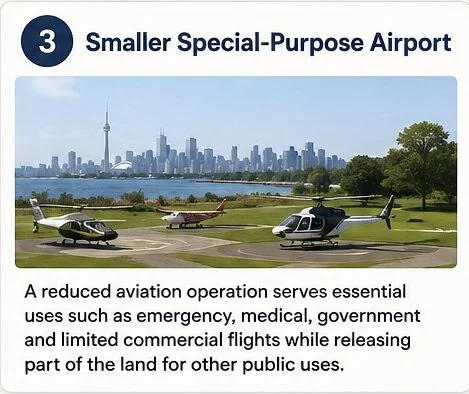
The study should compare complete strategies for meeting Toronto's aviation, regional transportation and waterfront needs—including continued or expanded operations at Billy Bishop, a smaller specialized airport, alternative locations for close-in aviation, and regional transportation models that could allow the Island Airport lands to be repurposed.
The question is not whether Billy Bishop creates value.
It is whether keeping aviation in this location creates greater total public value than meeting those transportation needs another way and using the land differently.
Why Begin Now?
2045 Is the Final Decision Point. Planning Must Begin Much Earlier.
The agreement governing Billy Bishop Airport currently runs to December 31, 2045.
What should happen then is a decision for the future. But understanding Toronto's choices should begin much sooner.
Transforming the harbour—or committing it to aviation for another generation—would have consequences lasting decades. Either direction could involve major transportation investments, infrastructure, environmental assessment, consultation, financing and long-term land-use decisions.
That is why Toronto should use the years ahead to answer a fundamental question:
What future would create the greatest net public benefit?
The purpose of a Net Public Benefit Study is not to decide today what happens in 2045.
It is to ensure Toronto understands its choices well before it has to make that decision.
The right time to compare the alternatives is while Toronto still has alternatives.
Toronto’s waterfront has many possible futures. The study must be capable of concluding that any one of these alternatives provides the greatest net public benefit if the evidence supports it.
What are the futures to compare?
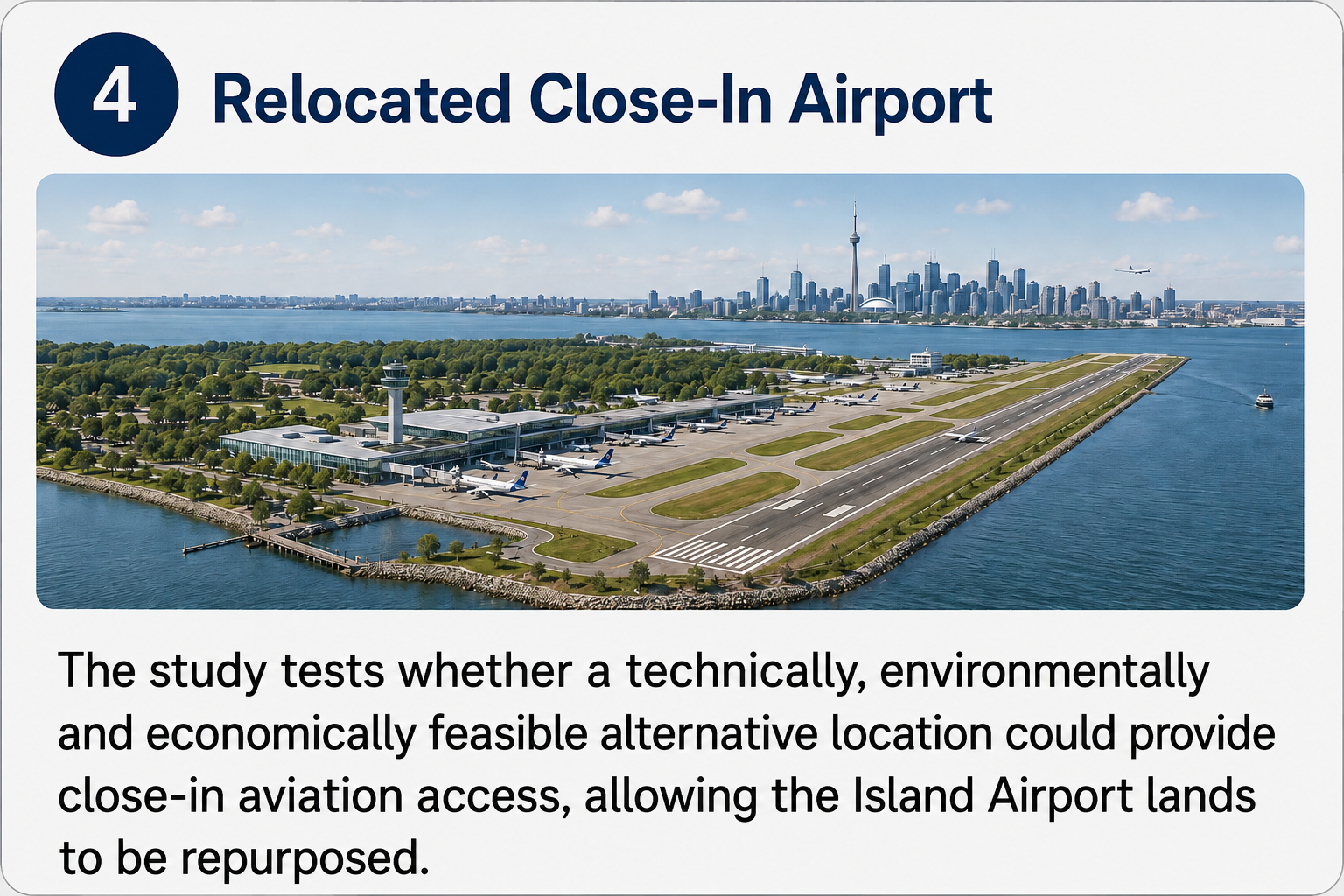
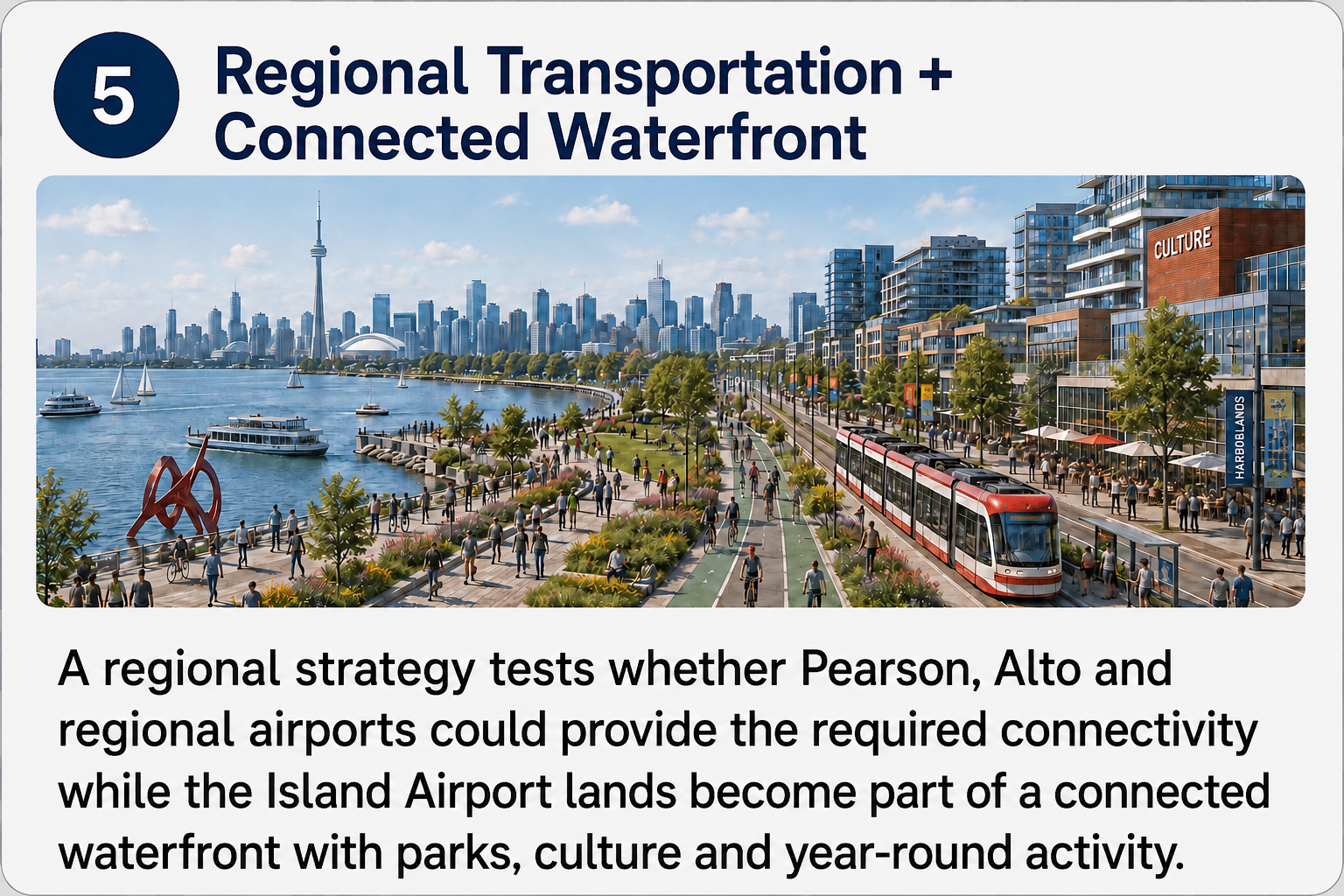
The study must be capable of concluding that any one of these alternatives delivers the greatest net public benefit—if the evidence supports it.
What should the study measure?
Aviation connectivity • passenger convenience • network effects • tourism • business activity • employment • regional accessibility
Each alternative should be evaluated against the same economic, social, environmental, transportation and financial criteria.
Parkland, waterfront access, public transit, walking, cycling, and connections between destinations.

Emissions, noise, habitat, water quality, flood protection and climate resilience.
Health, recreation, culture, accessibility, equity, Indigenous interests and civic identity.

Costs, revenues, subsidies, timelines, governance, regulation and delivery risk.
Not every public benefit can be expressed as revenue. Public access, resilience, health, and civic identity should be measured transparently rather than treated as having no value.
The Questions an Independent Study Should Answer
What is the highest and best use of Toronto’s harbour over the next 50-100 years?
What public value would be created by alternative harbour futures?
What aviation functions does Billy Bishop uniquely provide?
How could aviation and emergency-service requirements be accommodated elsewhere?
What are the full opportunity costs of maintaining airport use?
Which scenario creates the greatest Net Public Benefit?
Every Choice Has an Opportunity Cost
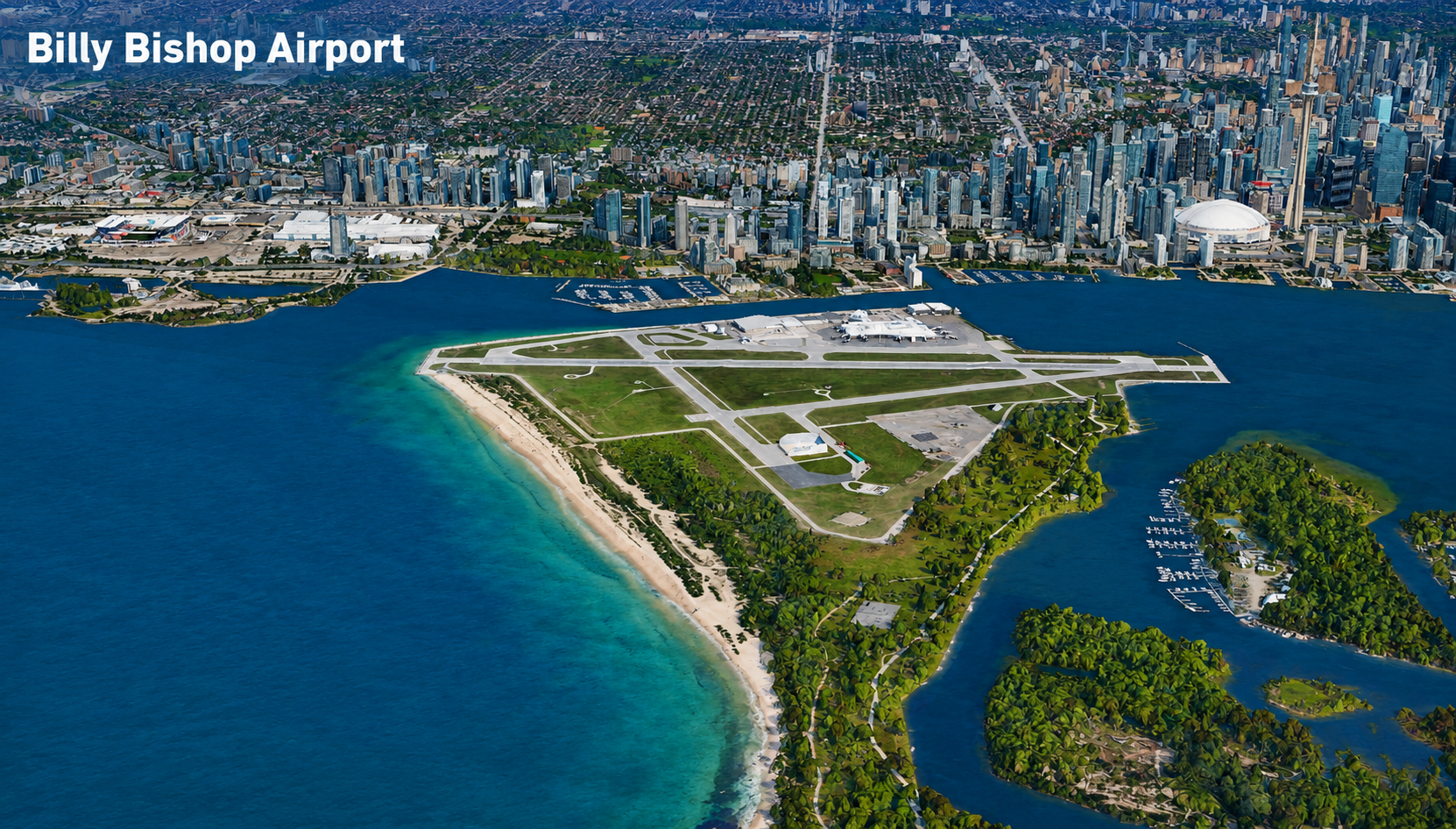
Keeping Billy Bishop has an opportunity cost: the waterfront connections, public uses and economic opportunities that its location may prevent.
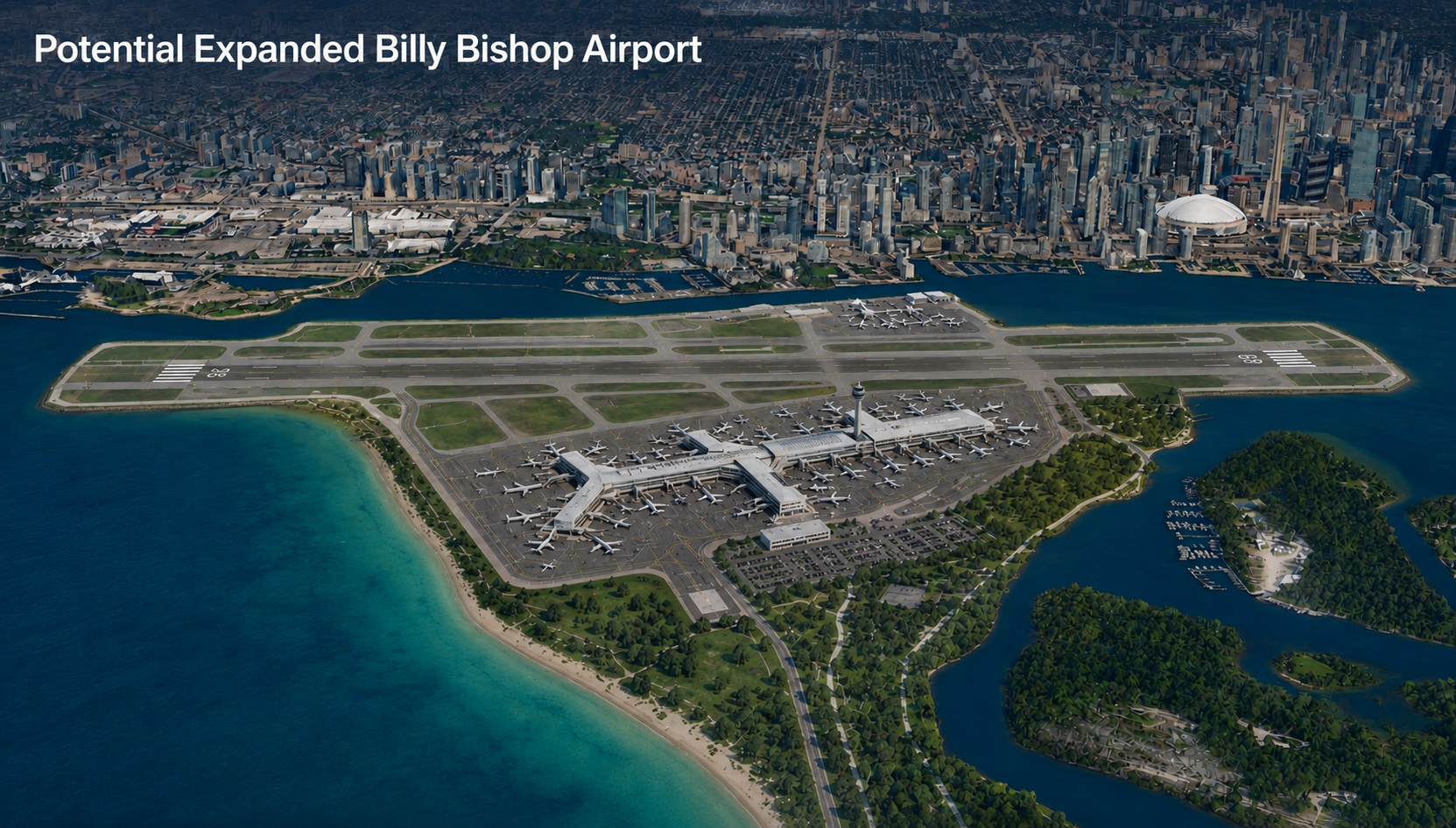
Expanding Billy Bishop carries additional opportunity cost, including the potential loss or degradation of existing waterfront amenities.
Relocating or closing Billy Bishop also has an opportunity cost: lost convenience, aviation connectivity and the cost of providing those functions elsewhere.
A credible Net Public Benefit Study must measure all three options.
What We Are Asking Governments to Do
Harbourlands is calling on the Governments of Canada and Ontario and the City of Toronto to jointly commission an independent Public Benefit Study of the highest and best use of Toronto’s harbour.
It should:
Forecast the need — determine Toronto's long-term passenger, business, medevac and general aviation requirements.
Assess the transportation system — examine Pearson, Billy Bishop, Alto, GO and regional airports as parts of one network.
Compare airport futures — assess continued, expanded and specialized operations at Billy Bishop.
Test alternatives — determine whether aviation functions now provided at Billy Bishop could be provided elsewhere, including whether another close-in or waterfront location is feasible.
Measure the waterfront opportunity — quantify the economic, tourism, environmental, recreational and public-realm value that could result from reconnecting the Island Airport lands with the wider waterfront.
Compare Net Public Benefit — determine which complete strategy produces the greatest long-term benefit after all costs, benefits and opportunity costs are considered.
Toronto has only one downtown harbour. Before committing it for another generation, governments should determine which future creates the greatest Net Public Benefit.