
Project Profile:
Parks and Public Spaces
Not one park. One connected public realm.
Harbourlands would create a connected family of parks, beaches, promenades, civic spaces, and natural landscapes around Toronto Harbour—each distinct yet together forming a continuous waterfront experience.
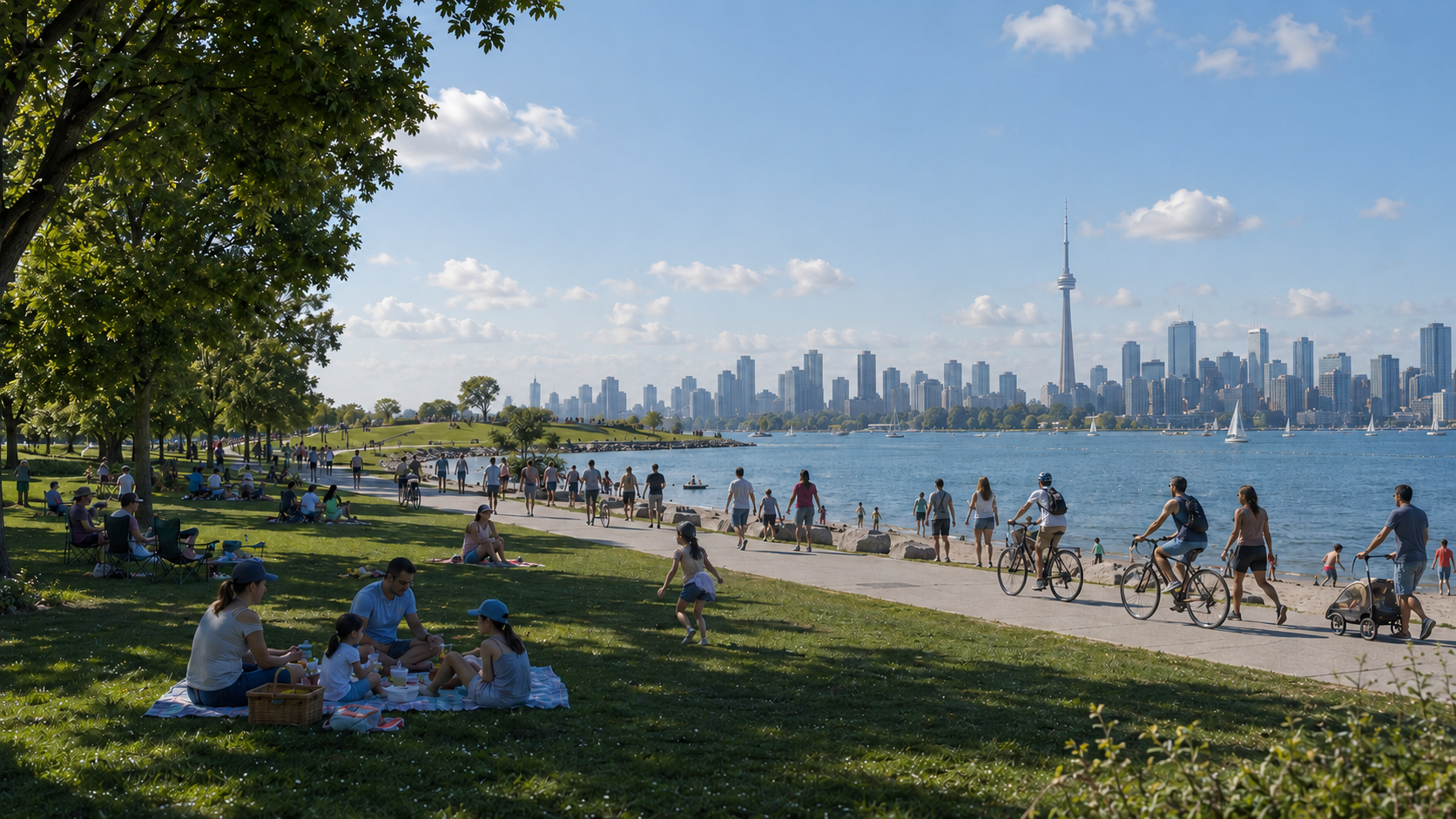
A Harbour Made Public
The goal is not simply more green space. It is to create a public realm worthy of Toronto's harbour—linking the waterfront, Islands and Port Lands into a destination that can be experienced year-round.
Different places should retain different identities. The Islands would remain informal, natural and family-oriented. The Port Lands could provide more active urban spaces. The Hearn could combine industrial heritage with civic life, while the Harbourlands Centre waterfront could offer a more formal public face to the harbour.
Distinct places. One connected experience.
The Islands: Toronto's Great Family Park
Toronto Island Park could remain the family, nature and recreation heart of the Harbourlands—not another intensive entertainment district.
Beaches, playgrounds, cycling routes, gardens, lawns and natural areas would remain central to its character.
If Billy Bishop Lands Became Available
Billy Bishop occupies approximately 85 hectares of the Toronto Islands. If those lands eventually became available for another use, they could significantly expand Toronto's family-oriented park system.
Former runway lands could become meadows, gardens, playing fields, picnic areas, wetlands, trails and flexible open spaces. Any transformation would require remediation, ecological restoration, shoreline and climate-resilience planning, heritage interpretation and careful phasing.
The opportunity would not be simply to remove an airport, but to complete one of the world's great urban island parks.
The Harbour Promenade
A continuous waterfront promenade would be the thread connecting the Harbourlands.
It could link Ontario Place and Exhibition Place with the Islands, Port Lands, Harbourlands Centre, the Hearn and Tommy Thompson Park—accommodating walking, cycling, running and mobility devices, with frequent places to stop and experience the water.
Its character should change with its surroundings: urban near major destinations, recreational on the Islands, and progressively more natural as it approaches Tommy Thompson Park.
The experience should vary. The connection should never disappear.
The Harbourlands Centre Waterfront
The Harbourlands Centre could anchor a convention, festival and hospitality district while creating a major new civic waterfront.
Promenades, terraces, gardens and plazas could open directly toward the harbour, skyline and Islands and accommodate festivals, exhibitions and public gatherings.
Even when no convention is underway, the waterfront should belong to the city.
The Hearn Civic Grounds
The Hearn could provide a dramatic cultural counterpart to the natural landscapes of Tommy Thompson Park.
Its chimney could remain a defining landmark, while the surrounding grounds host markets, performances, festivals, and civic events. Industrial structures and materials could be incorporated into a rugged public landscape that preserves the site's character.
The Hearn should feel unmistakably different from the Islands or the convention waterfront—but connected to both.
Beaches, Water and Nature
Water access should be treated as essential public infrastructure.
Existing beaches could be protected and improved while new swimming areas, paddling facilities, docks, fishing locations and places to approach the water are explored.
But not every shoreline should be programmed. Wetlands, native planting, habitat, and naturalized shorelines should form part of the public realm, particularly as you approach Tommy Thompson Park.
A great waterfront should make nature more accessible without making it less natural.
A Park for Every Season
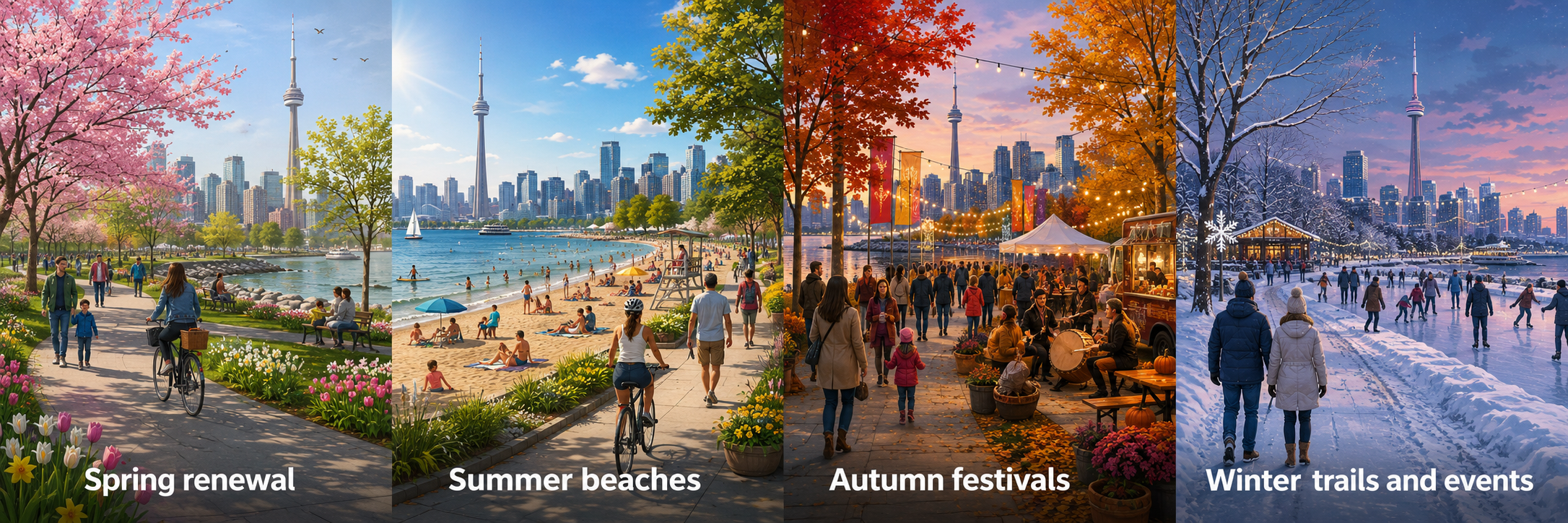
Harbourlands should be designed for year-round use.
Summer could bring beaches, cycling, boating, picnics and festivals; winter could bring skating, cross-country skiing, illuminated walks and seasonal events. Shelter, wind protection and thoughtful landscape design could make the waterfront inviting well beyond the summer months.
A Connected Public Realm
The success of Harbourlands would depend less on any single attraction than on how easily people can move between them.
Bridges, the Island Line, the Waterfront Line, trails and promenades could allow visitors to arrive without a car and experience the harbour as one connected landscape.
Seating, shade, washrooms, accessibility and clear wayfinding should support everyday use—not just festivals and major events.
Connection is what turns individual parks and attractions into a destination.
Design Principles
The parks and public spaces should:
preserve the Islands' natural, recreational and family character;
provide continuous public waterfront access wherever possible;
give each district a distinctive identity;
prioritize walking, cycling and public transit;
combine active gathering places with quiet landscapes;
protect and restore natural systems and expand access to the water;
support inclusive, accessible and year-round public use; and
ensure commercial activity supports rather than dominates the public realm.