
Moveable bridges are the enabling infrastructure for the Harbourlands vision. A bridge across each gap would connect Toronto’s waterfront from Exhibition Place to Tommy Thompson Park for pedestrians, cyclists, battery-assisted streetcars, service vehicles and emergency vehicles—without opening the Islands to general automobile traffic. Each bridge would open for vessels, preserving Toronto Harbour as both a working port and a recreational waterway.
The bridges are long-term enabling infrastructure. Their construction would depend on a future decision to convert the airport lands, together with detailed navigation, aviation, engineering and environmental studies.
Project Profile:
Moveable Bridges
Why We Need Moveable Bridges
The Harbourlands bridges are not simply transportation infrastructure. They are city-building infrastructure. The bridges would transform the disconnected waterfront into one continuous public realm.
Nevertheless, the bridges must respect the harbour. They must open efficiently for commercial and recreational vessels, minimize disruption to marine navigation and remain dependable in Toronto’s wind, ice and winter conditions.
They should be both infrastructure and civic architecture: reliable enough for everyday use, unobtrusive when closed and memorable when they open. Their final form would be determined through marine, transit, structural, environmental and public-realm studies.
Types of Moveable Bridge
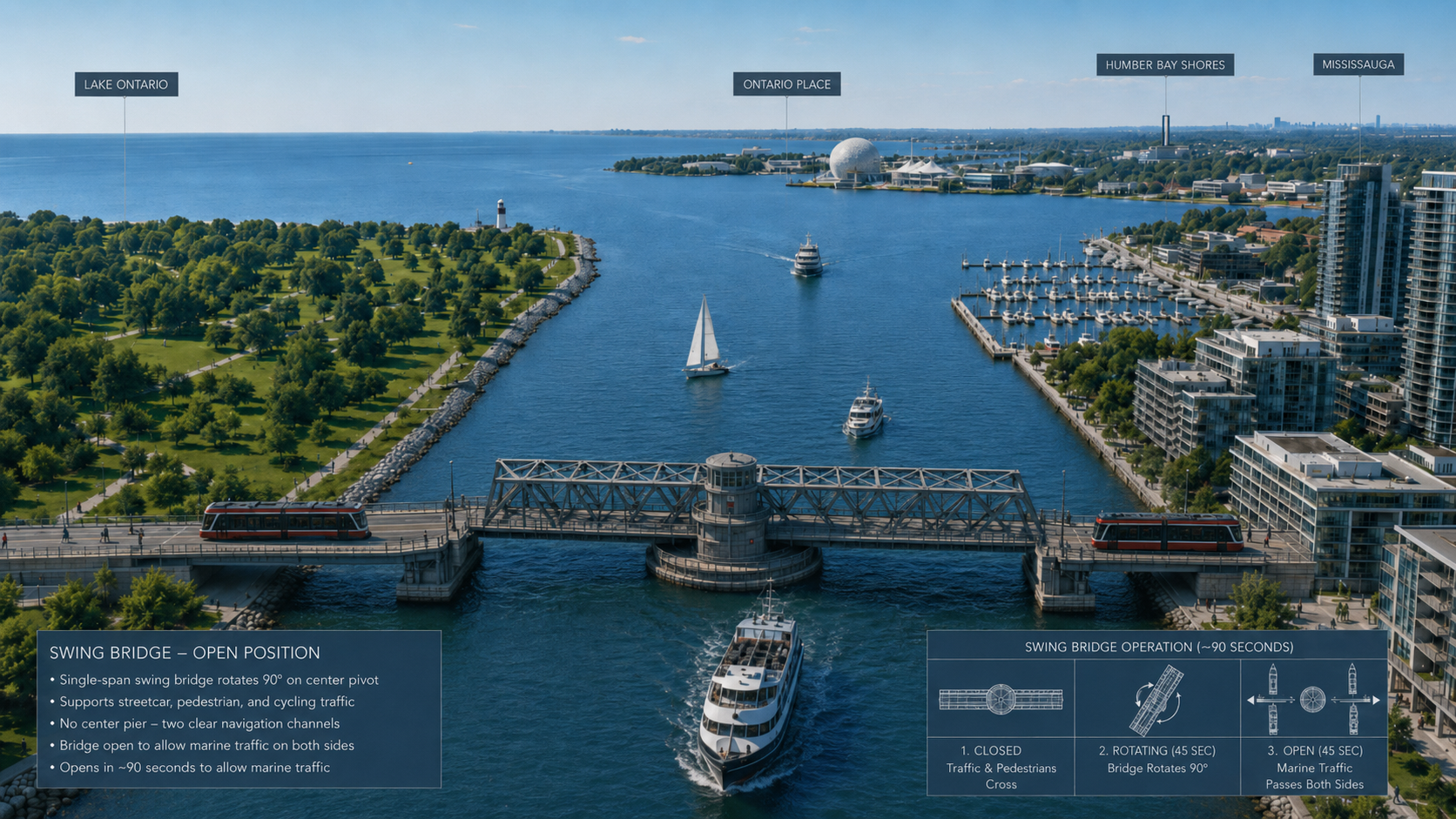
Swing Bridges rotate horizontally on a central pier.
A good example is the Manitoulin Island Swing Bridge at Little Current, which provides the only access to Manitoulin Island.
Swing Bridges
Bascule Bridges
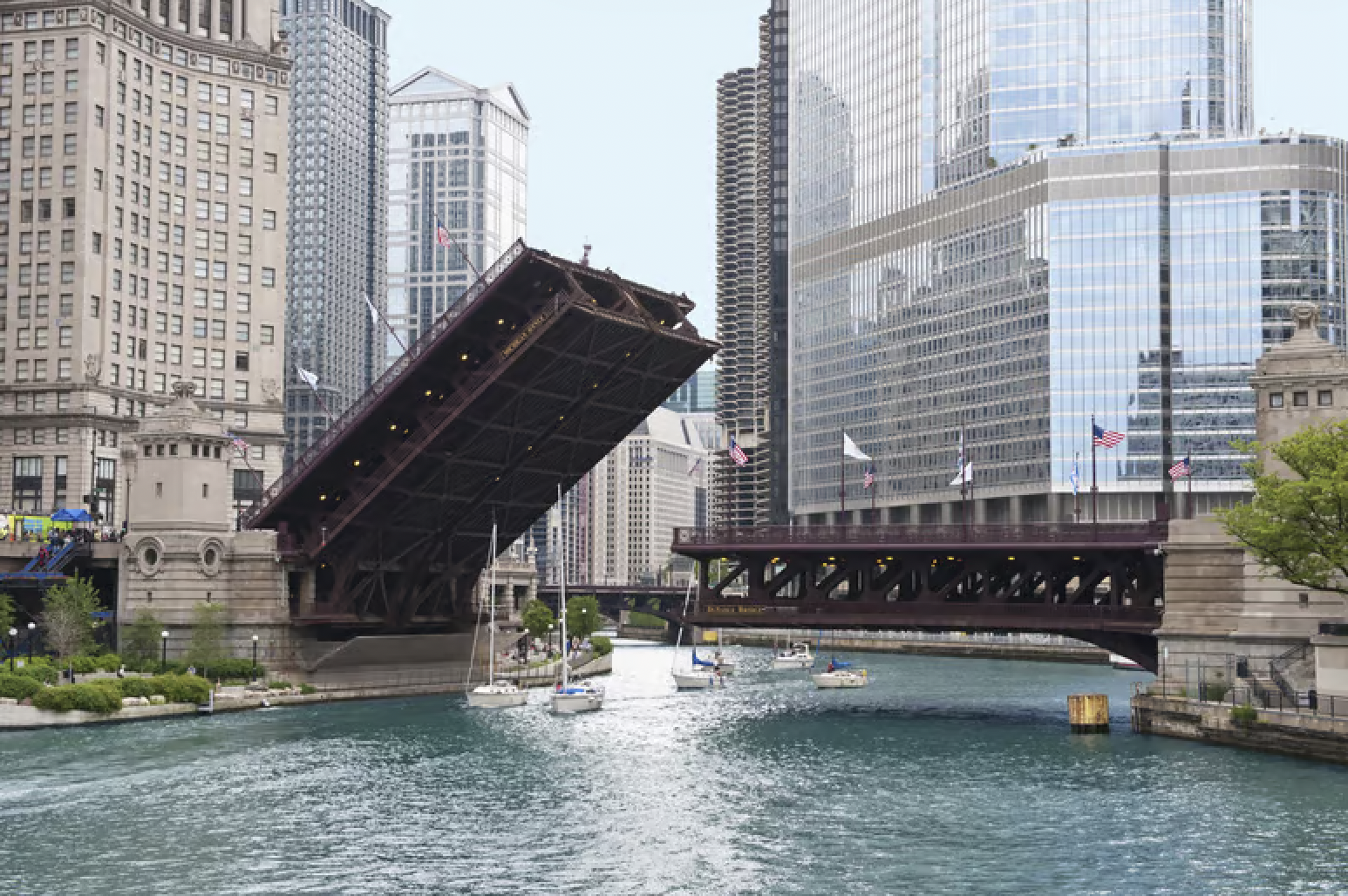
Bascule bridges swing upward from opposite shores.
A good example is the bascule bridges on the Chicago River.
Preliminary Bridge Concepts for the Harbourlands
The Western Gap
A swing bridge is probably best suited to the shorter Western Gap because of its comparatively simpler machinery, rapid movement and lower visual profile. Traffic through this gap is mostly recreational boats. Swing bridges are less expensive to build and maintain.
Nevertheless, final bridge types, alignments, and dimensions must be determined through technical and environmental studies, as well as airport decommissioning and aviation-obstacle requirements.
Conceptual image
The Eastern Gap
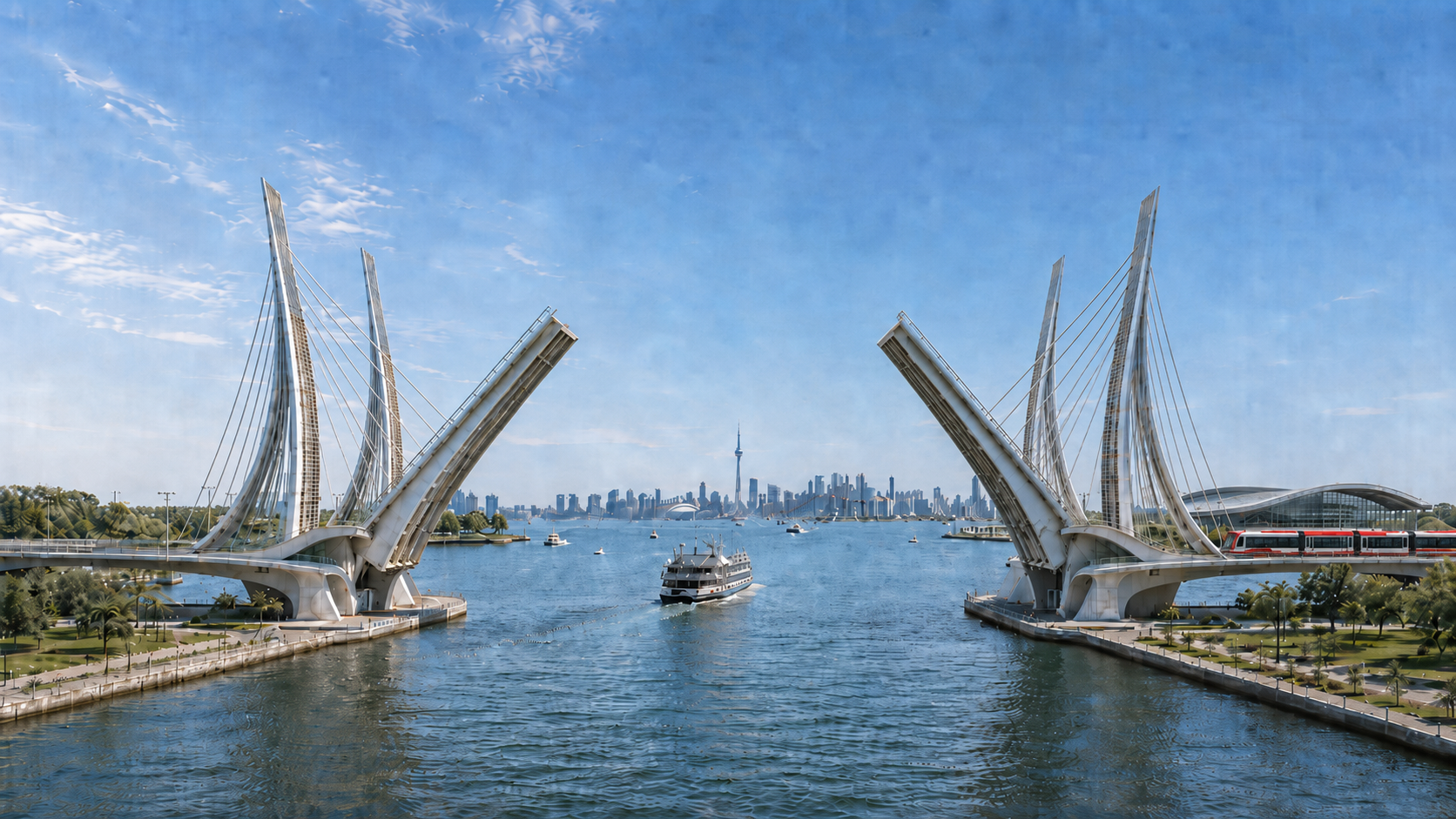
A double-leaf bascule bridge might be more suitable for the Eastern Gap. Although these bridges are more expensive to build and maintain, the channel is wider, and it must accommodate larger ships.
These are preliminary planning concepts. The final bridge types, alignments and dimensions must be determined through technical and environmental studies.
Conceptual image