
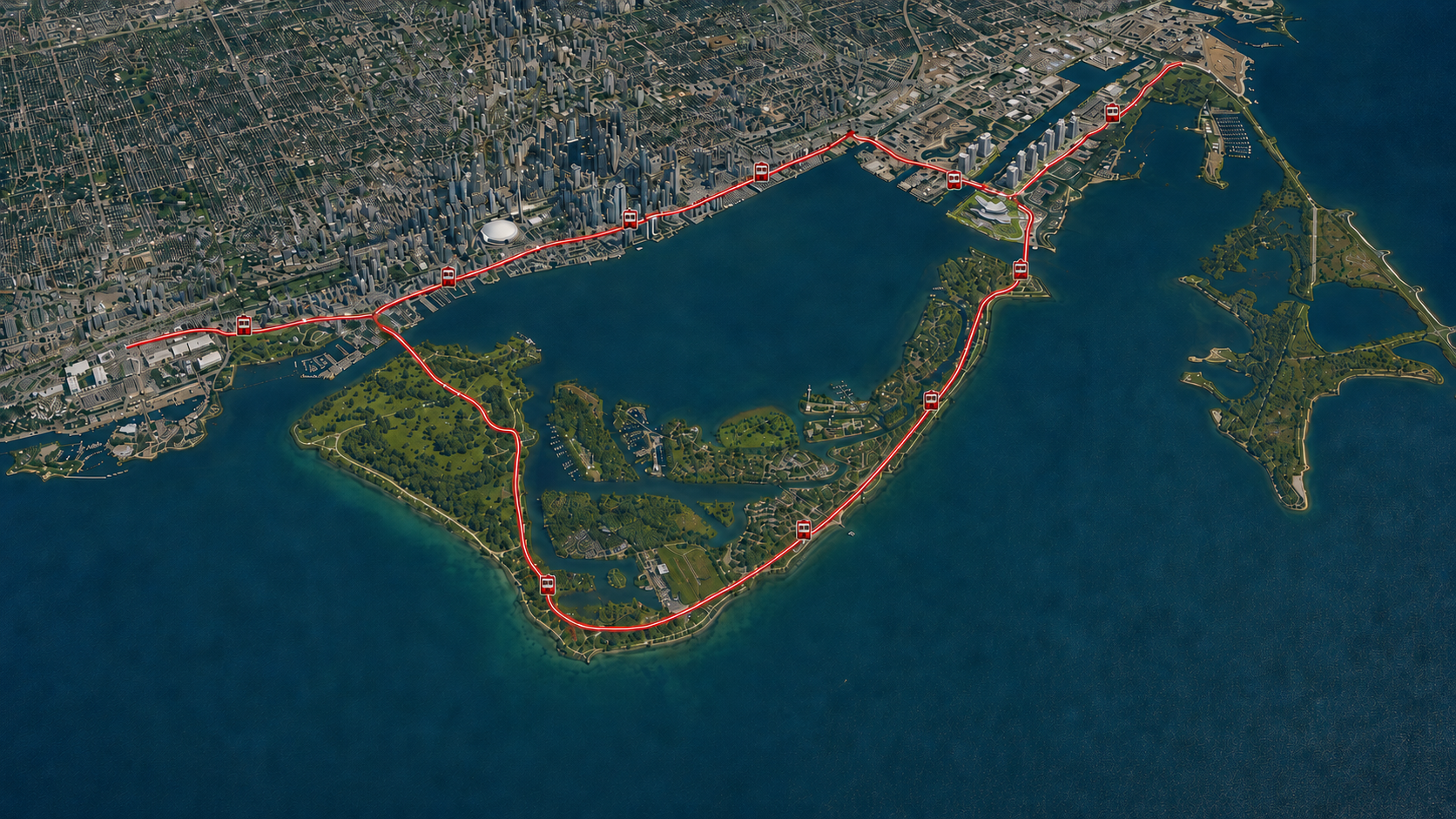
Toronto Has Only One Downtown Harbour.
Let’s make sure it’s delivering the greatest net public benefit.
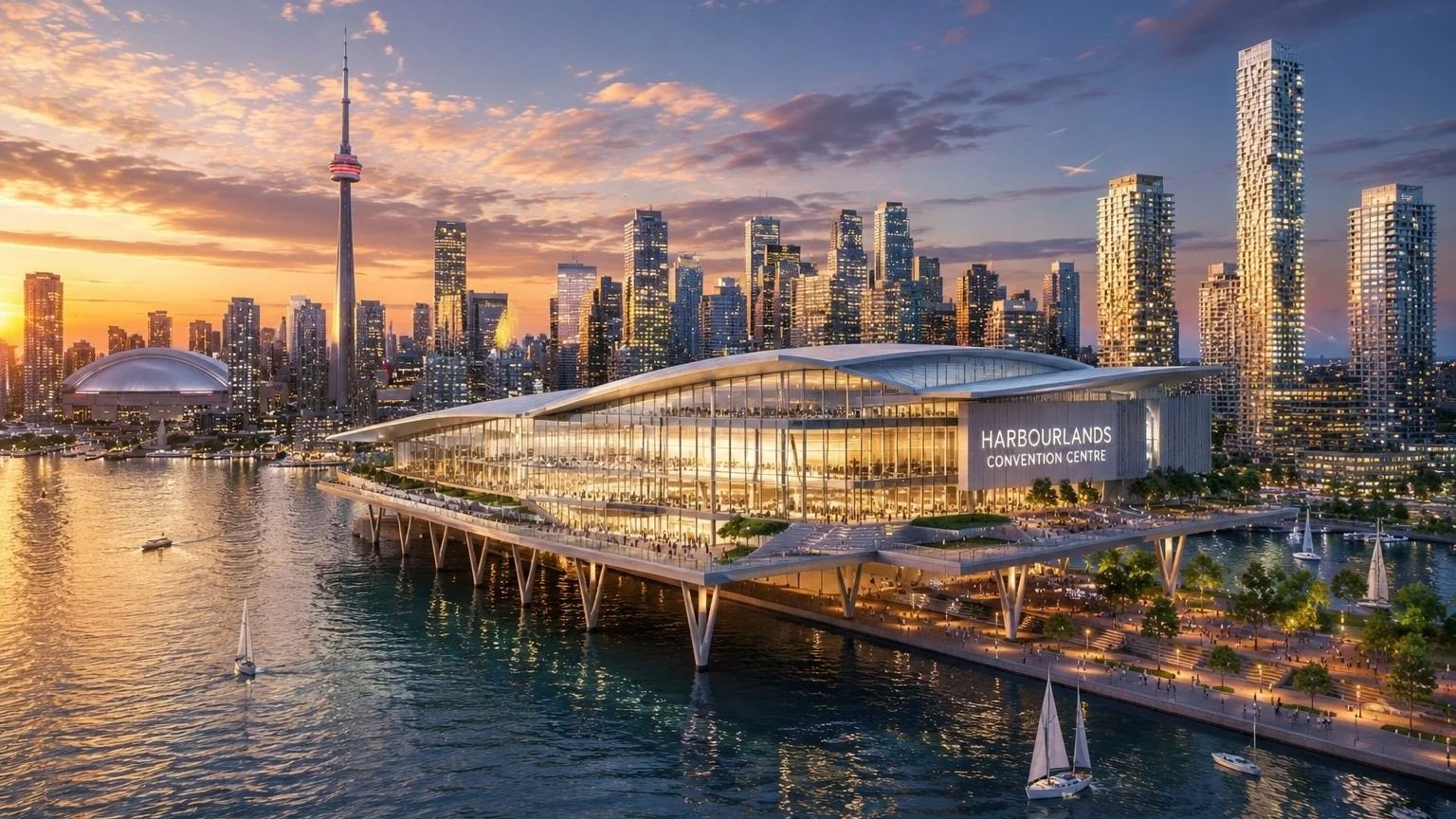
Conceptual visualization
Toronto’s harbour can serve many purposes—recreation, tourism, nature, culture, economic development, and transportation. But the land and water at the centre of the city are finite and irreplaceable. And it remains unsettled what role an expanded airport might play after the current Tripartite Agreement expires in 2045.
Well before then, Toronto should evaluate the alternatives for the waterfront’s future and begin implementing a long-term plan based on the use—or combination of uses—that would create the greatest overall public benefit.
Harbourlands is one option for that future. It is a vision for an all-seasons connected waterfront from Exhibition Place to Tommy Thompson Park, parts of which could be put in place well before 2045.
Toronto’s Waterfront Has Extraordinary Assets—But They Do Not Currently Operate as One
Exhibition Place and Ontario Place offer sports, concerts and major events.
Harbourfront brings city life, culture and entertainment to the water.
Toronto Island Park offers beaches, nature and recreation.
The Port Lands, the Hearn and Tommy Thompson Park offer enormous potential at the harbour’s eastern edge.
Yet these places remain separated by gaps in transit, access and experience.
Individually, these are remarkable places. Together, they could become one of the world’s great urban waterfronts.
What Does “Greatest Public Benefit” Mean?
“Greatest public benefit” means producing more overall value for the public than the available alternatives.
How Does Harbourlands Maximize Public Benefit?
Harbourlands maximizes net public benefit by treating the waterfront as a single, scarce public asset and asking how it can create the greatest combined value across many uses—not simply the greatest value for a single activity.
Its advantage is that benefits compound. A park is useful on its own. A convention centre is useful on its own. Transit, beaches, cultural attractions, hotels, trails and natural areas are useful on their own. But when they are connected into a single continuous waterfront destination, the benefits multiply. Each becomes more valuable.
Harbourlands is one conceptual possibility for the Toronto waterfront, not an approved plan, and should be tested against other credible alternatives through an independent study.
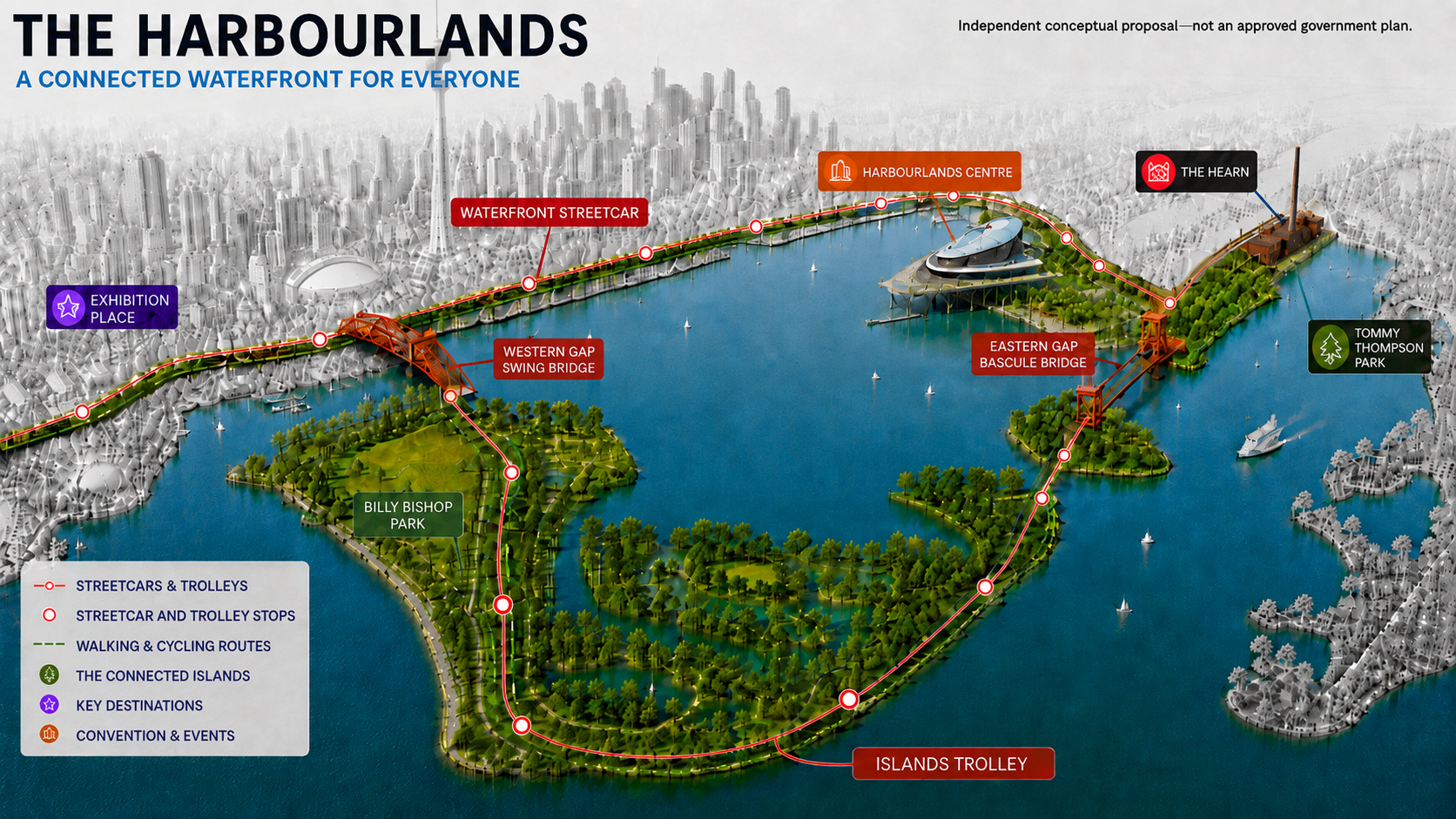
The Toronto Harbourlands
One Connected Waterfront Experience for Everyone.
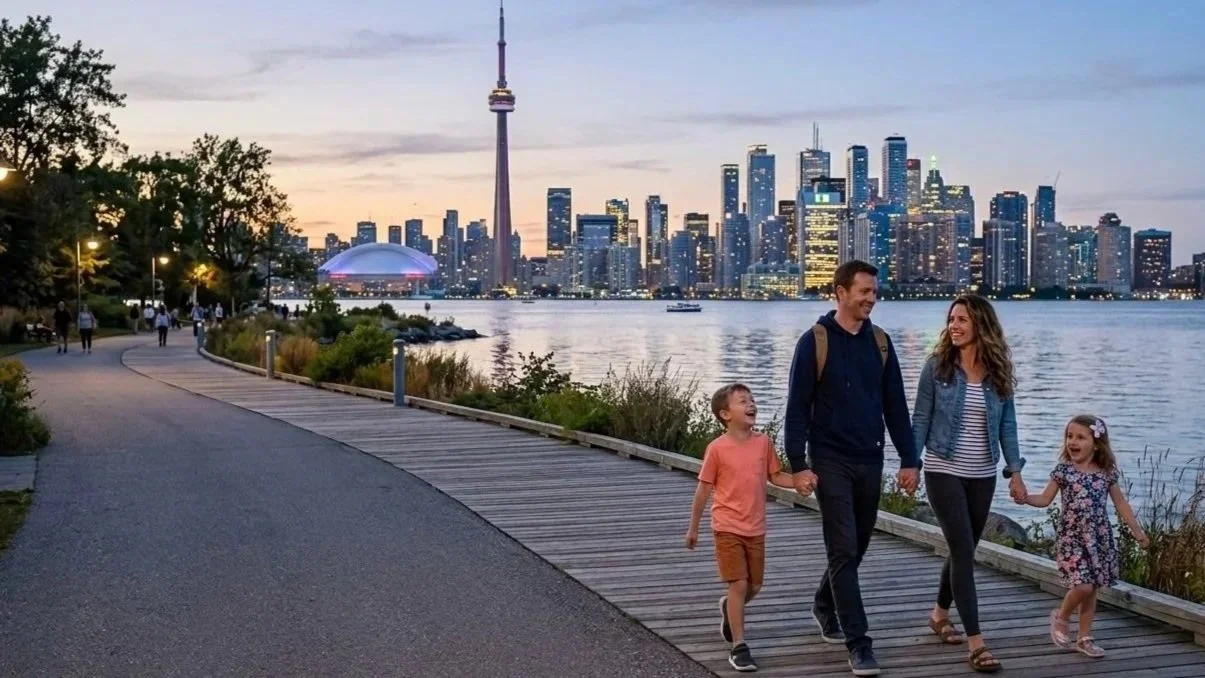
Public Life and Quality of Life
A waterfront for everyday life.
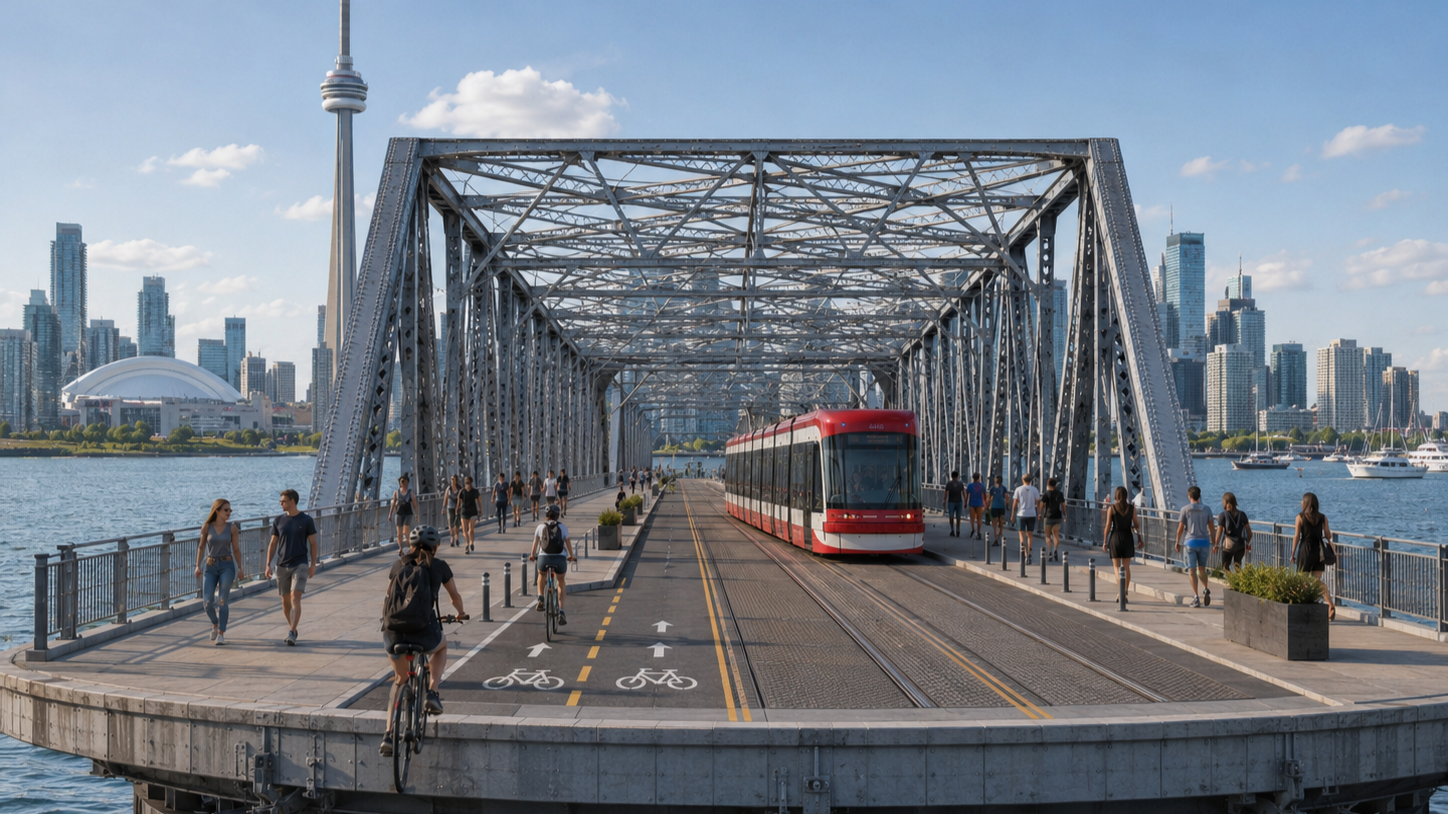
Connectivity and Accessibility
A harbour linked by transit, walking and cycling.
Economic and Visitor Value
A global destination with more to see, do, and experience.
Connected Destinations Create More Value than Isolated Ones
Connection multiplies value. Visitors stay longer. They visit more places. Businesses benefit from each other’s customers. Hotels, restaurants, festivals, parks and cultural attractions reinforce one another. The connected destination is greater than the sum of its parts.
Toronto’s waterfront assets are valuable on their own. But connected by transit, walking and cycling, they could operate as one major public and visitor destination—making more places accessible in a single trip, encouraging longer stays and allowing one destination to reinforce the others.
Two Connection Visions:
The Ontario government has proposed a connection model centred on Billy Bishop Airport, linking it to Ontario Place with a potential new convention centre on the lake. Perhaps it could work, but does it create the greatest public benefit?
Harbourlands illustrates a different model: a connected public waterfront integrated with the city’s transportation network — walking, cycling, ferries, streetcars, Union Station, regional transit and Pearson Airport — while placing a purpose-built convention district at one of Toronto’s most spectacular settings.
The question is which vision for a connected waterfront creates the greatest net public benefit.
Why Toronto Needs a Net Public Benefit Study
Toronto’s downtown harbour is an irreplaceable public asset. Decisions about its future should consider more than the value of any single use or operator.
Toronto is expected to add more than 700,000 residents by 2051, increasing demand for transportation, recreation, public space, tourism infrastructure and places for civic life.
An independent study should compare ongoing airport operations with credible alternatives, including the wider transportation, tourism, public space, and economic systems each option would support.
It should compare two competing models of connectivity: an airport-oriented model centred on Billy Bishop, or a people-oriented model that connects the waterfront to itself—and to Pearson, Union Station, regional transit and the city as a whole.
The analysis should include transportation demand, international access, jobs, tourism, public access, recreation, resilience, infrastructure costs, network effects and long-term opportunity costs.
A net public benefit study would not commit Toronto to closing the airport or adopting Harbourlands. But it would ensure that the future of Toronto’s one downtown harbour is determined by evidence and the greatest overall net benefit to the public.
Great Waterfronts Deliver More Than One Kind of Return
Chicago demonstrates the power of a connected waterfront
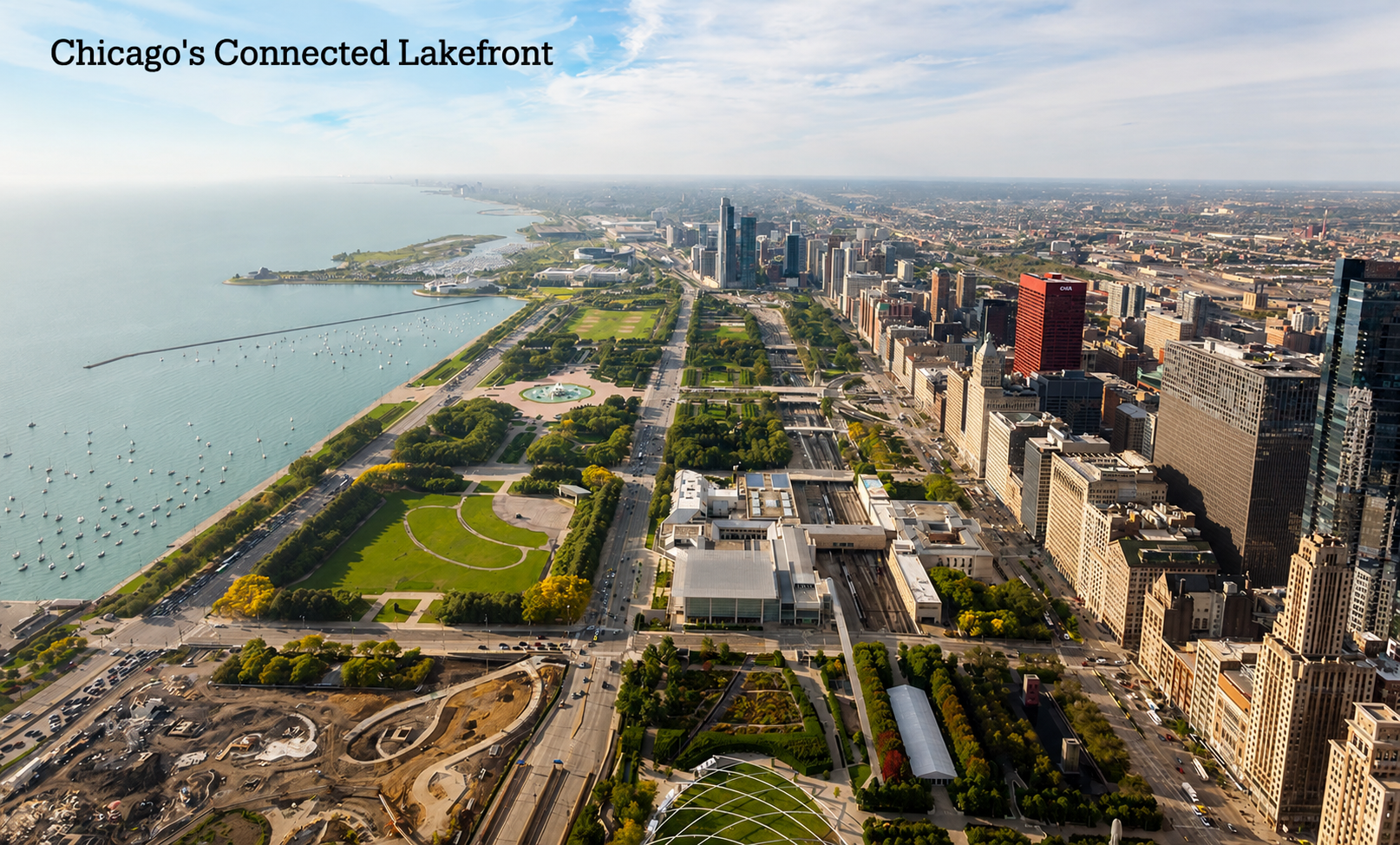
Chicago’s 29-kilometre Lakefront Trail connects beaches, harbours, parks and cultural attractions along Lake Michigan. Millennium Park alone attracts more than 20 million visitors each year.
But the real strength of Chicago’s waterfront is not any single attraction—it is how they connect. The Lakefront Trail, Navy Pier, Museum Campus, beaches, hotels, restaurants, Millennium Park, and the McCormick Place convention centre function as parts of one larger destination, encouraging visitors to stay longer, explore more and spend more.
The result is a waterfront that strengthens Chicago’s position as one of North America’s leading tourism and convention cities while creating an extraordinary public realm for residents and visitors alike.
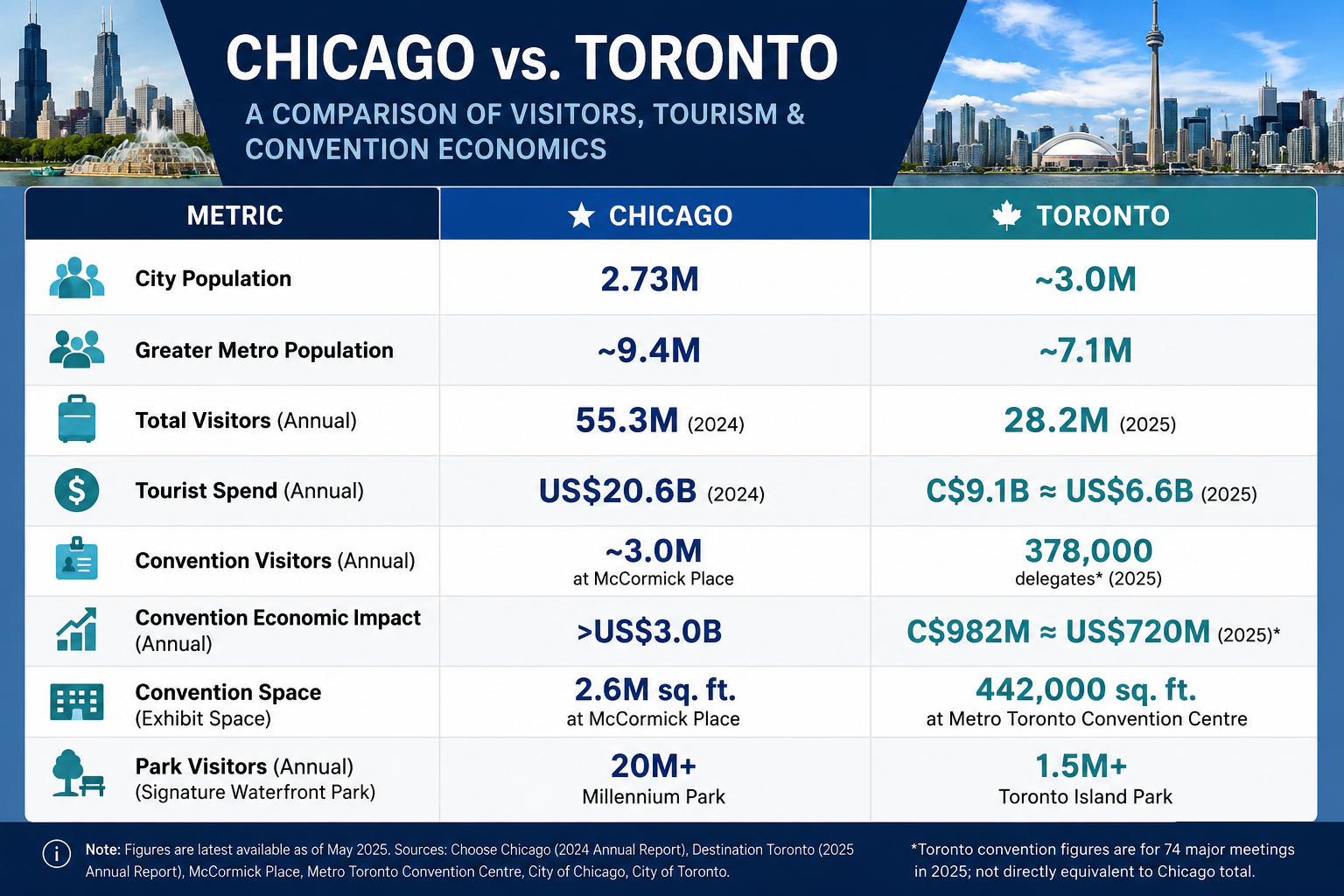
Chicago’s Lakefront Trail demonstrates a simple principle: connection creates value.
Toronto’s Island Airport Decision Is Settled...for Now.
But Its Long-Term Waterfront Question is Not.
Which future for Toronto’s one downtown harbour will create the greatest net public benefit for generations to come?
More than 87,000 people participated in the federal consultation on the expansion of Billy Bishop Airport. Preliminary figures indicate that 87% opposed it.
Ottawa’s decision protected Toronto from immediate, irreversible change—but it did not settle the waterfront’s long-term future.
Toronto should now commission an independent study of the alternatives to put the matter to rest.