
Project Profile:
Harbourlands Centre
A Waterfront Convention District for Toronto
Could Toronto create a purpose-built convention district combining major convention capacity with hotels, transit, entertainment, parks and one of the world's great urban waterfronts?
Harbourlands does not argue that the Port Lands are necessarily the answer. It argues that Toronto should find out before the opportunity disappears.
Chicago Shows What a Waterfront Convention District Can Become
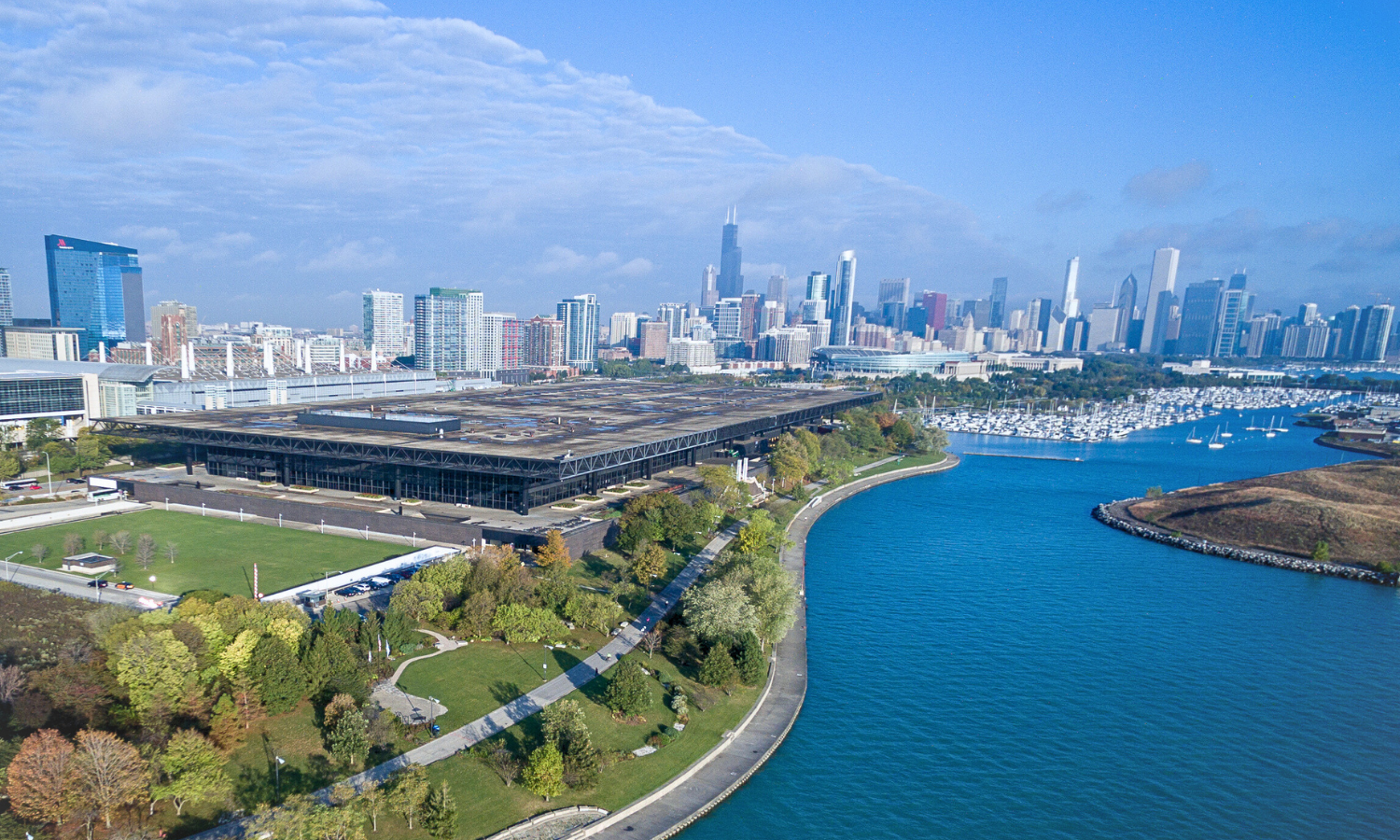
McCormick Place sits on Chicago's Lakefront Trail, connected to the city's parks, museums, hotels, restaurants and attractions. Its enormous convention capacity matters — but so do its location and connections.
McCormick Place's attraction is not simply its size.
Convention visitors can leave an event and immediately experience Chicago's waterfront, Museum Campus, Soldier Field, Lakefront Trail and downtown. The convention centre is part of a larger visitor destination rather than an isolated facility.
Chicago demonstrates that conventions and waterfronts can reinforce one another.
The convention centre brings people to the city. The waterfront turns their visit into an experience.
Toronto already possesses many of the ingredients of a world-class convention destination: a globally recognized skyline, an extraordinary harbour, the Toronto Islands, major attractions and one of North America's most diverse cities.
What it does not have is a large, integrated convention district capable of combining major exhibition capacity with hotels, restaurants, entertainment and public space in a single destination.
The Metro Toronto Convention Centre has an exceptional location beside Union Station and the downtown hotel district. But its exhibition space is divided across separate buildings, its largest continuous hall is no longer large by international standards, and meaningful expansion would require a complex redevelopment of an already constrained downtown site.
Ontario's Auditor General has previously identified Toronto's competitive limitations in the convention market, including international events that the city could not accommodate.
Toronto’s Convention Challenge
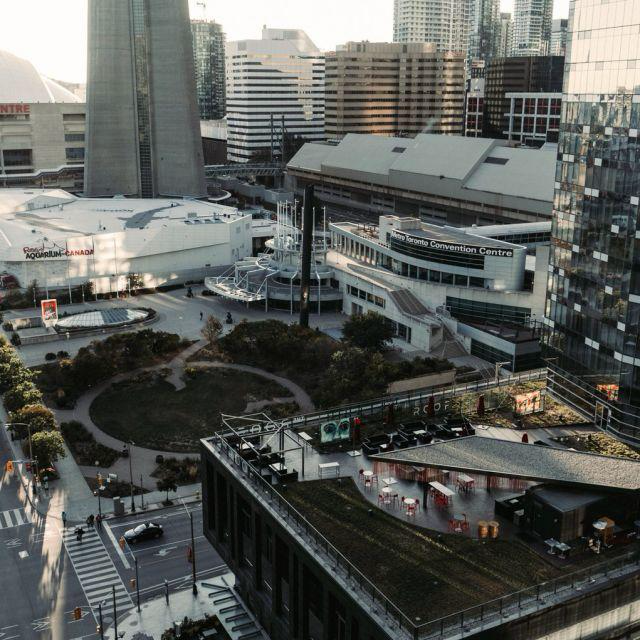
The question is not whether the MTCC remains valuable. It clearly does.
The question is whether rebuilding it represents Toronto's best opportunity for the next generation — or whether another location could allow the city to compete for convention business it cannot accommodate today.
What About Exhibition Place?
Exhibition Place is a serious option.
The Enercare Centre already provides more than one million square feet of convention and exhibition space. The site includes hotels, major event venues, significant public spaces, and extensive exhibition, festival, and entertainment spaces.
It also benefits from an established identity as one of Toronto's major gathering places. Its scale and existing infrastructure also make it a credible location for further convention investment.
For those reasons, Exhibition Place should be evaluated alongside a rebuilt MTCC and a Port Lands alternative.
Its limitations are different: it was not originally designed as an integrated convention district, and its facilities serve many competing public uses. Significant expansion, however, would have to coexist with sports, festivals, public spaces, heritage buildings and the precinct's many other established uses.
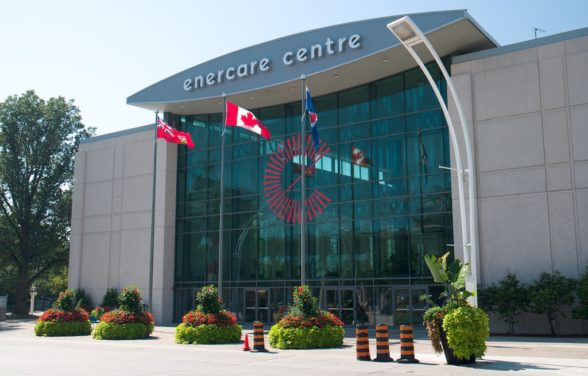
The question is whether Toronto should continue expanding what already exists — or use this moment to consider whether an entirely new convention district could create greater long-term value.
The Port Lands Provide a Different Opportunity
The Port Lands offer something neither the MTCC nor Exhibition Place can easily provide:
the chance to design an entire convention district from the beginning.
Instead of adding exhibition space to an inherited facility, Toronto could plan the convention centre, hotels, transit, restaurants, entertainment, public spaces and future expansion as one integrated destination.
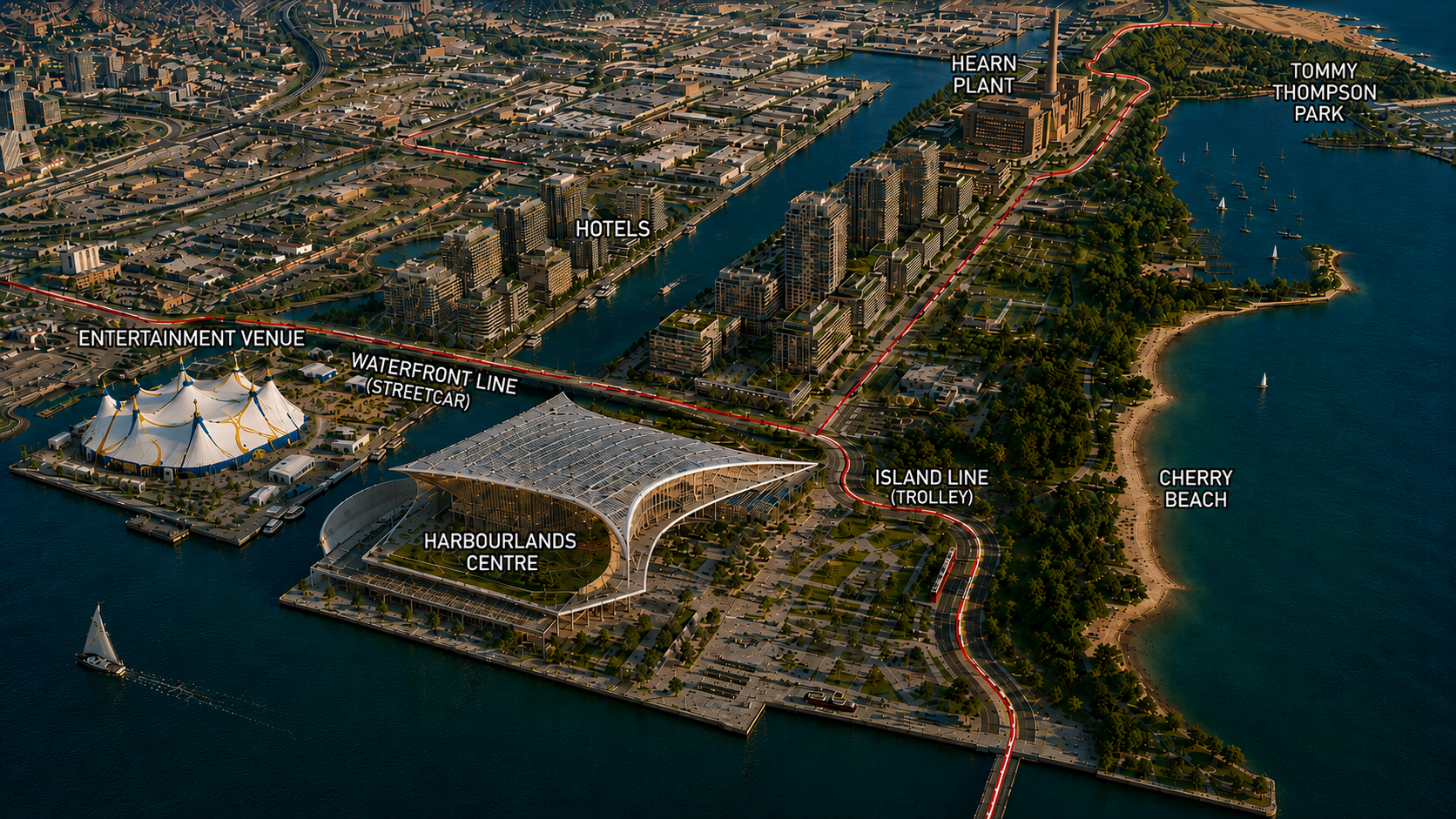
A Harbourlands Centre could include:
a large, uninterrupted exhibition floor and flexible meeting space;
several convention hotels within walking distance;
restaurants, entertainment and cultural venues;
purpose-built freight, loading and servicing facilities;
direct waterfront transit; and
land reserved for future expansion.
The Port Lands encompass approximately 356 hectares and are already undergoing a generational transformation. The question is whether part of that transformation should include a new eastern anchor for Toronto's visitor economy.
The Port Lands offer something rare:
the space to build an entire waterfront destination from the ground up.
Why consider the Port Lands for a convention district?
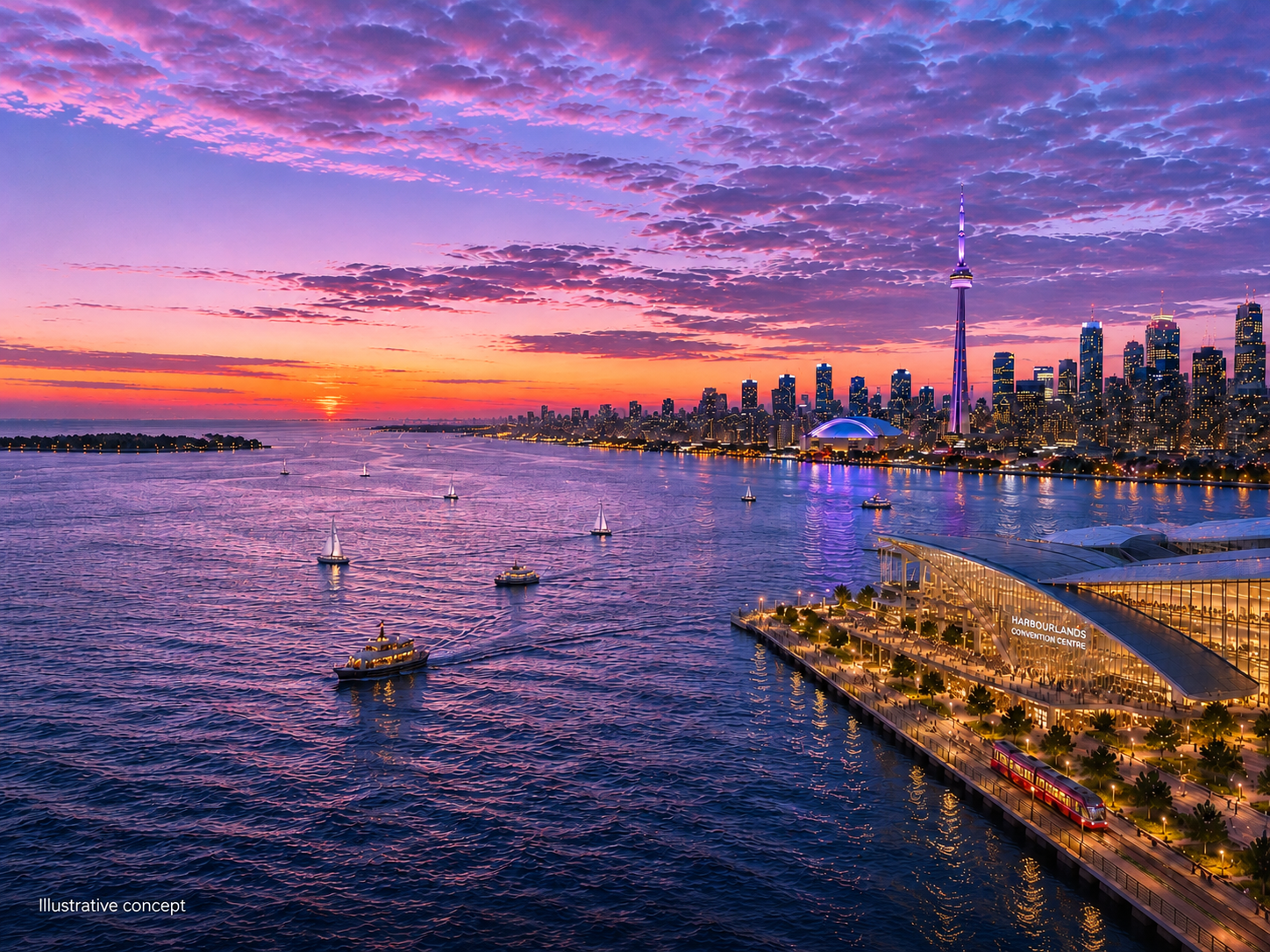
The setting is the attraction
The Harbourlands Centre would overlook Toronto Harbour, the Islands and the downtown skyline.
Meeting rooms, hotel lobbies, restaurants, terraces and public spaces could face the water. Delegates could walk to Cherry Beach, the Hearn, waterfront parks, restaurants, entertainment venues and harbour excursions.
The destination itself would become part of Toronto's convention offer.
Come for the convention. Experience the harbour. Discover Toronto.
A Convention District, Not an Isolated Building
A Harbourlands Centre would succeed only as part of a complete district.
That means convention hotels within easy walking distance, year-round restaurants and entertainment, attractive public spaces, and frequent transit connecting directly to Union Station and the rest of the waterfront.
Waterfront East Transit is already being advanced toward Ookwemin Minising. Any Harbourlands Centre would need to be planned as part of that transit system — not added afterward.
The objective should be a journey that is simple and memorable:
Union Station → Harbourfront → Ookwemin Minising → Harbourlands Centre → The Hearn
Without excellent transit and nearby hotels, the Port Lands location would be a disadvantage.
With them, its harbour setting could become its greatest competitive advantage.
Now Is the Time to Ask the Bigger Question
Important planning and infrastructure work is already underway in the Port Lands. New neighbourhoods, parks, roads, transit and employment areas are being planned, with housing expected to play a major role.
That work should continue.
But it should not prevent Toronto from asking a larger question:
What is the highest and best use of this extraordinary waterfront land?
The decision not to expand Billy Bishop Airport created an opportunity to view Toronto Harbour as a single, connected asset. The same principle should apply to the Port Lands.
Housing is essential, but Toronto is expected to add housing throughout the city for generations.
Housing can be built in many places. Toronto Harbour cannot.
Once streets are laid out, development parcels are committed, and buildings are constructed, the opportunity to create a major waterfront destination becomes difficult — and eventually impossible — to recapture.
That is why the comparison should happen now, while Toronto still has the freedom to choose.
A study should compare the three alternatives on convention capacity, cost, hotel and transit access, economic impact, public benefits and long-term flexibility.
It should determine which combination of uses will create the greatest economic, civic and public value over the next century.
Compare the Options Before We Build
Rebuild the MTCC. Expand Exhibition Place. Create a purpose-built Port Lands convention district.
Study all three—and choose the option that creates the greatest net public benefit for Toronto over the next century.
The time to make that comparison is now, while Toronto still has the freedom to choose.